blog

SPMSPM2

Wednesday, May 05, 2021

SPM and SPM-2 Quick Tips Case Study: What’s Behind Challenging Behaviors in the Classroom?

Read more
  •  

    New research from Sweden shows that autistic young people are more likely to experience mental health difficulties than people of the same age who don’t have an autism diagnosis.  

    The study, which assessed 20,841 autistic people ages 16 to 25, also found that autistic females had higher risk than autistic males. The risk among girls and women was especially high for anxiety, depression, and sleep disturbances. By 25 years of age, slightly more than 22% of autistic females and nearly 11% of autistic males had symptoms significant enough that they sought treatment in a hospital, researchers said (Martini et al., 2022).


    What Causes the Higher Risk? 

    Evidence from some earlier studies has shown that several factors could have contributed to higher risk among those assigned female at birth: 

    • Autism can look and feel different for people assigned female at birth, which often leads to delayed identification and intervention. 
    • Some clinicians mistake autism characteristics for the symptoms of other conditions, which can also result in later diagnoses (Estrin et al., 2020).  

    Learn more: Why Are So Many Autistic Girls & Women Still Missing Out on Early Identification?

    The lack of access to regular mental health care could also explain why hospitalization rates were higher for some people. For example, in community settings, more White students receive evidence-based interventions such as cognitive behavioral therapy than Black or Latinx students do. And services for autistic children can be easier to find than services for autistic adolescents and young adults. 

    A recent study described several other barriers that can make it harder for autistic individuals and their families to access quality health care:  

    • living in a rural community, or where there is a shortage of services 
    • having a health care provider without training in how to support autistic individuals 
    • lacking health insurance or the means to cover treatment costs 
    • feeling a sense of stigma around mental health care (Malik-Soni et al., 2022) 

    Sometimes the barriers are systemic or external. Sometimes they’re personal or internal. In a small study published in 2020, autistic young adults expressed some beliefs about mental health care that may have prevented them from seeking help.   

    For example, some said therapy would work only if they saw a therapist who specialized in working with autistic individuals. Others believed anxiety was just part of autism. Most of the study participants said they preferred to self-manage and did not seek help until their symptoms became severe (Coleman-Fountain et al., 2020). 


    Need for Comprehensive Evaluation

    Because autism and mental health conditions so often co-occur, experts recommend that autism evaluations include screening for anxiety and depression (Lai et al., 2022). Clinicians should also look for any other physical or mental health conditions that could cause anxiety, depression, or sleep problems.  

    Identifying mental health concerns is a crucial part of the evaluation process, because many autistic individuals say these conditions have a bigger impact on their overall well-being than the core characteristics of autism (Lawson et al., 2020).  

    For more information about trusted assessments that can help you identify autism, anxiety, depression, or other co-occurring conditions, contact the WPS Assessment Consultant in your area.  


    Note: This article uses terms such as “female,” “male,” and “girls and women.” WPS respects the full range of sexes and gender identities. When reporting on studies involving sex and gender, we aim to accurately represent the work of researchers. 


    Further Reading on Autism


    Videos and Webinars on Autism


    Research and Resources:


    Coleman-Fountain, E., Buckley, C., & Beresford, B. (2020). Improving mental health in autistic young adults: A qualitative study exploring help-seeking barriers in UK primary care. The British Journal of General Practice, 70(694), e356–e363. https://doi.org/10.3399/bjgp20X709421 

    Corbett, B. A., Schwartzman, J. M., Libsack, E. J., Muscatello, R. A., Lerner, M. D., Simmons, G. L., & White, S. W. (2021). Camouflaging in autism: Examining sex-based and compensatory models in social cognition and communication. Autism Research, 14(1), 127–142. https://doi.org/10.1002/aur.2440 

    Lai, A. G., Chang, W. H., & Skuse, D. (2022). Autism and mental illness in children and young people require standardised approaches for assessment and treatment. The Lancet Regional Health. Europe, 16, 100360. https://doi.org/10.1016/j.lanepe.2022.100360  

    Lawson, L. P., Richdale, A. L., Haschek, A., Flower, R. L., Vartuli, J., Arnold, S. R., & Trollor, J. N. (2020). Cross-sectional and longitudinal predictors of quality of life in autistic individuals from adolescence to adulthood: The role of mental health and sleep quality. Autism, 24(4), 954–967. https://doi.org/10.1177/1362361320908107 

    Lockwood Estrin, G., Milner, V., Spain, D., Happé, F., & Colvert, E. (2021). Barriers to autism spectrum disorder diagnosis for young women and girls: A systematic review. Review Journal of Autism and Developmental Disorders, 8(4), 454–470. https://doi.org/10.1007/s40489-020-00225-8. 

    Maddox, B. B., Dickson, K. S., Stadnick, N. A., Mandell, D. S., & Brookman-Frazee, L. (2021). Mental health services for autistic individuals across the lifespan: Recent advances and current Gaps. Current Psychiatry Reports, 23(10), 66. https://doi.org/10.1007/s11920-021-01278-0 

    Malik-Soni, N., Shaker, A., Luck, H., Mullin, A. E., Wiley, R. E., Lewis, M., Fuentes, J., & Frazier, T. W. (2022). Tackling healthcare access barriers for individuals with autism from diagnosis to adulthood. Pediatric Research, 91(5), 1028–1035. https://doi.org/10.1038/s41390-021-01465-y 

    Martini, M. I., Kuja-Halkola, R., Butwicka, A., Du Rietz, E., D'Onofrio, B. M., Happé, F., Kanina, A., Larsson, H., Lundström, S., Martin, J., Rosenqvist, M. A., Lichtenstein, P., & Taylor, M. J. (2022). Sex differences in mental health problems and psychiatric hospitalization in autistic young adults. JAMA Psychiatry, 10.1001/jamapsychiatry.2022.3475. Advance online publication. https://doi.org/10.1001/jamapsychiatry.2022.3475 


  •  

    In August 2022, the Texas State Board of Examiners of Psychologists heard another request to change the title Licensed Specialist in School Psychology to the title School Psychologist, as the role is known in 48 other states. It may sound like a local issue, but the need for a name change points to a broader issue.  


    School mental health professionals are too often overlooked, overworked, and ignored. Some feel nearly invisible.  

    Ashley Arnold, MA, LSSP, NCSP, assessment consultant manager at WPS and Texas delegate to the National Association of School Psychologists (NASP), spoke to the board not long after the shooting at Robb Elementary School in Uvalde, Texas. In the aftermath of the shooting, CBS News published an article with this headline: “Half of all Texas school districts have no mental health services. Uvalde was one of them.” The article, which has since been corrected, completely overlooked LSSPs.  

    “Given the tragic event of the murder of 19 children and two staff,” Arnold told the board, “this false news article is a punch in the gut to those LSSPs that were providing services and holding the hands of those grieving family members.” 

    She continued, “How would you feel, knowing that you did the best you could in the days following one of the worst professional days of your career, only to read, as you are trying to prepare for a new school year, that you didn’t exist? That the services you provided didn’t happen?” 

    Here’s a brief look at the problem of invisibility among school-based mental health workers—and what we can do to start fixing it. 


    Many school mental health professionals work in relative isolation.

    School psychologists, counselors, and social workers often work in spaces that are separated from more visible areas of the school.  

    “It’s easy to feel isolated because you may be the sole mental health provider, and you’re working in what feels like a closet. When you don’t have physical proximity, you’re not seen as part of the faculty,” Arnold says. 

    On top of their physical isolation, some providers work in districts where they cover more than one school, which cuts down on the time providers can spend building relationships in each school. And the nationwide shortage of mental health service providers means there are fewer colleagues to meet and connect with.  

    A recent report by the Kaiser Family Foundation, which analyzed data from the 2022 National School Pulse Panel, showed that 61% of schools said insufficient staff coverage was the biggest barrier to providing good mental health care in schools. At the start of this school year, 19% of schools reported vacancies in mental health positions (Panchal et al., 2022). 

    The isolation problem can be even more pronounced for professionals in underrepresented groups. A 2020 NASP survey showed that 85% of school psychologists are White—a topic recently covered by National Public Radio, NASP, and the Black School Psychologists Network. 


    Few people outside of school staff have any concept of the important role of school mental health professionals.

    The American School Counselor Association (ASCA) State of the Profession 2020 report showed that a very small percentage of people outside schools understand what a school counselor does or why they are needed. Counselors estimated the percentages to be 

    • 5% of school board members; 
    • 4% of parents and families; 
    • 2% of policy makers; and 
    • 1% of the general public (ASCA, 2021). 

    Even within schools, administrators are often surprised to learn what mental health professionals can do. Arnold told the state board, “Every year, I have principals say to me, ‘My LSSP can do that?’” 


    School mental health professionals often experience the erasure of the work they are trained to do—and find themselves doing other work instead.

    Amid widespread teacher and staff shortages, school mental health professionals are more likely than ever to be saddled with duties that are unrelated to providing mental health services. The ASCA report showed that 39% of school counselors feel being assigned “inappropriate duties” is a significant day-to-day challenge (ASCA, 2021).  

    In a report that explored the mental health crisis in schools, the American Civil Liberties Union recommended that school districts “ensure that school-based mental health providers are able to focus on mental health duties; i.e., that counselors are in fact counseling, rather than primarily spending their time with tasks that have nothing to do with their training [such as] achievement test proctoring, clerical tasks, schedules, etc.” (Whitaker et al., 2019).  

    These problems are largely systemic. They require big paradigm shifts and policy changes. What can individual mental health professionals do?  


    Advocate.

    “Advocacy is my passion,” Arnold says. “At times, it can feel like you’re the lone voice calling for change. But there is a sense of community among advocates.”  

    The experience can also be empowering. “Advocacy is like a marathon. You come out strong, and then you encounter some days where it’s hard and you feel defeated. But, eventually, it pays off. Once you experience success, you’re motivated to keep going.” 


    Talk about your working conditions.

    With staff shortages reaching unprecedented levels, more school boards and administrators are starting to listen. This may be the ideal time to make your needs known.  

    NASP has created a list of respect-oriented retention strategies that call for more clerical assistance, assessment and intervention materials, office space, and technology support. NASP is also pressing for more networking opportunities at state conferences and more professional development specifically geared toward school mental health providers (NASP, n.d.). 


    Build supportive networks.

    Perhaps there is a silver lining in the COVID-19 crisis. The sheer scale of the need for services sparked a period of greater collaboration among many school mental health professionals. Some schools have developed mental health teams of school counselors, psychologists, and social workers who collaborate with families and community mental health professionals (Reaves et al., 2022).  

    In a recent study about post-COVID changes, school social workers told researchers that they had been reaching out to colleagues outside their schools, working with community partners. One participant said, “I’m just thrilled to be able to be in so many different networks. I don’t feel like I’m alone on an island” (Phillippo et al., 2022). 

    Arnold also recommends joining professional organizations, which can enhance your sense of community, especially if you’re the sole mental health professional for an entire district.   

    “I’ve been at conferences and met people from across the state. It helps to connect with colleagues. Going to conferences can become like a family reunion. You’re with your people,” she says. 

    When Arnold stepped to the podium to call—once again—for a name change, she had little idea that her advocacy was about to pay off. Let’s hope it’s the first of many much-needed changes for school mental health professionals.  


    Research and Resources:


    American School Counselors Association. (2021, December). ASCA research report: State of the profession 2020. https://www.schoolcounselor.org/getmedia/bb23299b-678d-4bce-8863-cfcb55f7df87/2020-State-of-the-Profession.pdf 

    Arnold, Ashley. (2022). Personal interview. 

    National Association of School Psychologists. (n.d.). Retention strategies. https://www.nasponline.org/resources-and-publications/resources-and-podcasts/school-psychology/shortages-in-school-psychology-resource-guide/retention-strategies  

    Panchal, N., Cox, C., & Rudowitz, R. (2022, September 6). The landscape of school-based mental health services. https://www.kff.org/other/issue-brief/the-landscape-of-school-based-mental-health-services/  

    Phillippo, K., Lucio, R., Shayman, E., & Kelly, M. (2022). “Why wasn’t I doing this before?” Changed school social work practice in response to the COVID-19 pandemic. Qualitative Social Work, 14733250221076061. https://doi.org/10.1177/14733250221076061 

    Reaves, S., Bohnenkamp, J., Mayworm, A., Sullivan, M., Connors, E., Lever, N., Kelly, M. S., Bruns, E. J., & Hoover, S. (2022). Associations between school mental health team membership and impact on service provision. School Mental Health, 14, 672–684. https://doi.org/10.1007/s12310-021-09493-z 

    Whitaker, A., Torres-Guillen, S., Morton, M., Jordan, H., Coyle, S., Mann, A., & Sun, W.-L. (2019, March 4). Cops and no counselors: How the lack of school mental health staff is harming students. https://www.aclu.org/sites/default/files/field_document/030419-acluschooldisciplinereport.pdf 


  • Updated July 12, 2023


    The leading attention-deficit/hyperactivity disorder (ADHD) assessment has been revised and is now available through WPS.  

    Conners 4th Edition™ (Conners 4®) features: 

    • updated normative data for improved inclusivity; 
    • test items revised for fairness and clinical relevance; 
    • new scales that enable evaluators to take a more accurate, dimensional approach to diagnosis; 
    • measures designed to identify potential co-occurring conditions;  
    • opportunities to collect information on functional outcomes across settings;  
    • improved data visualization through online scoring; and 
    • a more flexible digital user experience. 

    Conners 4 has been reconceptualized to incorporate new ADHD research and provide a richer, clearer picture of the child at the heart of the evaluation.  

    Here’s a look at what’s new in Conners 4. 


    Conners 4 is more inclusive and accessible.

    Using U.S. and Canadian census data, researchers compiled norms for the test from a broad sample representative of the whole population. Researchers stratified data according to gender, race, ethnicity, age, geographic region, and parental education. 

    In collaboration with cross-cultural consultants, researchers also revised and redesigned test items for greater cultural sensitivity and gender-inclusive language. And Conners 4 parent, teacher, and student forms have adjusted reading levels to make them easier to use and more accessible. 


    Conners 4 has greater accuracy.    

    Conners 4 test developers aligned the assessment with current research, updates to diagnostic criteria, and the best-practice recommendations of leading international ADHD organizations. The result is an assessment that allows evaluators to 

    • measure the severity of ADHD symptoms; 
    • compare impairment levels to a reference sample of other people who also have ADHD; 
    • analyze the response style of raters providing information; 
    • discover how ADHD symptoms affect functioning at home, at school, and in peer interactions; 
    • compare strengths and weaknesses for a detailed profile;  
    • use a symptom scale to take a dimensional approach rather than a yes-no categorical diagnosis;  
    • collaborate with caregivers and families with an easy-to-use feedback handout; and 
    • describe any response patterns that could indicate exaggeration, careless answers, omissions, or other test administration issues. 


    Conners 4 is comprehensive.

    ADHD overlaps with, looks like, or sometimes causes co-occurring conditions. To identify any co-occurring conditions that may need separate interventions or further evaluation, Conners 4 enables you to assess symptoms related to: 

    • severe conduct; 
    • self-harm; 
    • sleep difficulties; 
    • emotional dysregulation; 
    • depression; and 
    • anxiety. 


    Conners 4 is fully flexible.

    As a digital assessment, Conners 4 will be compatible with the WPS Online Evaluation System™ (OES). This functionality allows time-conscious evaluators to: 

    • administer assessments online; 
    • score forms online; 
    • visualize student data; 
    • print paper forms; and 
    • access a digital manual. 

    Find out more about the Conners 4 to improve ADHD evaluations for you and the families you serve.


  •  

    The WPS Graduate School Alliance Program (GSAP) provides graduate programs in psychological and behavioral health professions with access to some of the most trusted and reliable assessments in use today—100% free.  

    “WPS started the program in 2013 to help professors and instructors provide real-world experience to graduate students,” explains WPS Senior Marketing Coordinator Lindsey Sandoval.  

    GSAP members can request up to three free online assessments each year. In some circumstances, paper assessments may be available. To qualify, applicants must be professors or training instructors at 

    • accredited, degree-conferring academic institutions; 
    • certified internship programs; or 
    • approved postdoctoral certification programs, training clinics, and workshops. 

    Tests available through GSAP are used in clinical and school psychology, speech–language therapy, occupational therapy, and counseling settings to measure 

    • sensory processing;  
    • autism 
    • childhood anxiety; 
    • developmental behavior; 
    • adaptive behavior; 
    • oral and written language; 
    • social communication;  
    • self-concept; 
    • reading and reading readiness; 
    • school motivation and learning strategies; 
    • pragmatic language; and 
    • other skills, strengths, and diagnostic criteria.  

    GSAP membership can be useful to instructors and graduate students in several practical ways. Here’s a brief overview of the benefits.  


    GSAP provides students and instructors with authentic learning experiences.


    The assessments available through GSAP are the same validated measures used by thousands of school and clinical psychologists, speech–language pathologists, occupational therapists, and other practitioners the world over.  

    “Students can get personal experience and training in how these measures work before they graduate, so they’re already familiar with the tools before they’re practicing professionally,” Sandoval says.   

    Each graduate student receives login credentials for the WPS Online Evaluation System (OES). The OES is a platform available to clinicians who buy an assessment for online use. Students and instructors have access to WPS Assessment Consultants and customer support as well as professional development opportunities—resources that can stay with them through their early years of professional practice.


    “I am so grateful for this program. I teach many graduate students in ASD and supervise graduate interns from several universities. The GSAP program has allowed me to expose my students to these outstanding assessments at my clinic. Many graduate interns have commented on how easy the assessments are to use and interpret.”

    —Kimberly Ho, PhD, CCC-SLP


    Instructors can use GSAP assessments flexibly to achieve their instructional goals.

    “The OES allows instructors to create classes and assign homework and projects involving the assessments,” Sandoval says. “And you can see how the grad students are doing.” 

    Individual assignments, peer collaborations, whole-class instruction—exactly how to integrate these validated measures into course planning is up to each instructor. Scaffold, instruct, coach, provide feedback—all as graduate students become familiar with the use of tests and technologies. 

    And because instructors can request up to three different assessments a year, over time students can explore a wide range of assessments.  


    GSAP gives students a chance to learn and practice telehealth assessment through the OES.

    Since the COVID-19 pandemic, school and clinical psychologists have seen a surge in demand for telehealth services. The Kaiser Family Foundation estimates that 36% of all outpatient mental health and substance use visits now take place virtually (Lo et al., 2022). In response, telehealth education is making its way into many higher education programs.   

    A 2022 study published in the Journal of Technology in Behavioral Science explored the growing number of doctoral-level clinical psychology programs that have begun training graduate students in telehealth services. Researchers found that just half of the programs with telehealth education provided instruction in how to adapt assessment for telehealth delivery. Roughly 64% of the instructors polled said they wished students had more telehealth education before they began their clinical internships and careers (Perle et al., 2022). 

    “Integrating telehealth education into graduate learning holds many benefits over teaching providers post-degree,” researchers said.  

    Some of those benefits include opportunities 

    • to apply what they’ve learned about telehealth delivery of assessments; 
    • to discuss ethics, legal considerations, and data security when delivering telehealth assessments; and 
    • to build students’ self-efficacy and comfort with telehealth assessment. 

    Many WPS assessments, including several available through GSAP, can be administered via telehealth. For a look at the WPS assessments available through the OES, go here. You may also wish to review our Remote Assessment Guidelines 


    “We have found the GSAP program very helpful to our graduate students in school psychology as they are learning various assessment methodologies. Our students and their clients have found the WPS online platform easy to navigate. The assessments have helped provide our students with important client data to help hone their case conceptualization and report-writing skills.”  

    Paul McCabe, PhD 

    Clinical and School Psychology 

    Brooklyn College—CUNY 


    Becoming an approved GSAP member is quick, easy, and free.

    “Professors and instructors can apply online,” Sandoval says. “The process takes just a few minutes. Once we make sure the program qualifies, we’ll send a link with the requested tests, usually in just a few days.” 

    It really is that simple. To apply, complete the online GSAP Application. Want to know more? Explore the GSAP FAQs  

    WPS supports the work you do in the clinic and the classroom, whether you’re a seasoned professional or a student working toward graduation and professional licensure. This alliance can last a lifetime. 


    Research and Resources:


    Lo, J., Rae, M., Amin, K., Cox, C., Panchal, N., & Miller, B. F. (2022, March 15). Telehealth has played an outsized role meeting mental health needs during the COVID-19 pandemic. The Kaiser Family Foundation. https://www.kff.org/coronavirus-covid-19/issue-brief/telehealth-has-played-an-outsized-role-meeting-mental-health-needs-during-the-covid-19-pandemic/  

    Perle, J. G., Perle, A. R., Scarisbrick, D. M., & Mahoney, J. J., III. (2022). Educating for the future: A preliminary investigation of doctoral-level clinical psychology training program’s implementation of telehealth education. Journal of Technology in Behavioral Science, 7(3), 351–357. https://doi.org/10.1007/s41347-022-00255-5 


  •  

    What to Know About Dyslexia’s Comorbidities

    Identifying dyslexia can be more complicated when other health or developmental conditions are also present. As an educator or clinician, you’re asked to find out if a reading difficulty is the result of dyslexia or some other condition that changes how the brain works. For example, is a student feeling anxiety because reading is so hard, or is anxiety keeping a student from reading with ease? 

    This article may help you map the shared territory, differentiating factors, and key questions to ask as you make your way through a comprehensive dyslexia evaluation. 


    What Makes a Dyslexia Comorbidity So Common 

    Roughly 60% of those with dyslexia have at least one other diagnosis (Darweesh et al., 2020). Researchers have found that conditions co-occur because of the specific way biological, environmental, and protective factors interact in people’s bodies and in their lives (Moll et al., 2020).   

    Here are some ideas to bear in mind: 

    • A single risk factor, such as family income level or genetic differences, may lead to deficits in different areas.  
    • Symptoms from multiple conditions can overlap. For example, problems with working memory are linked to both ADHD and dyslexia.  
    • Conditions can develop independently of each other or one condition may develop as a result of another.
    • When people have more than one condition at the same time, the effects of each condition tend to be more severe (Willcutt et al., 2020).  


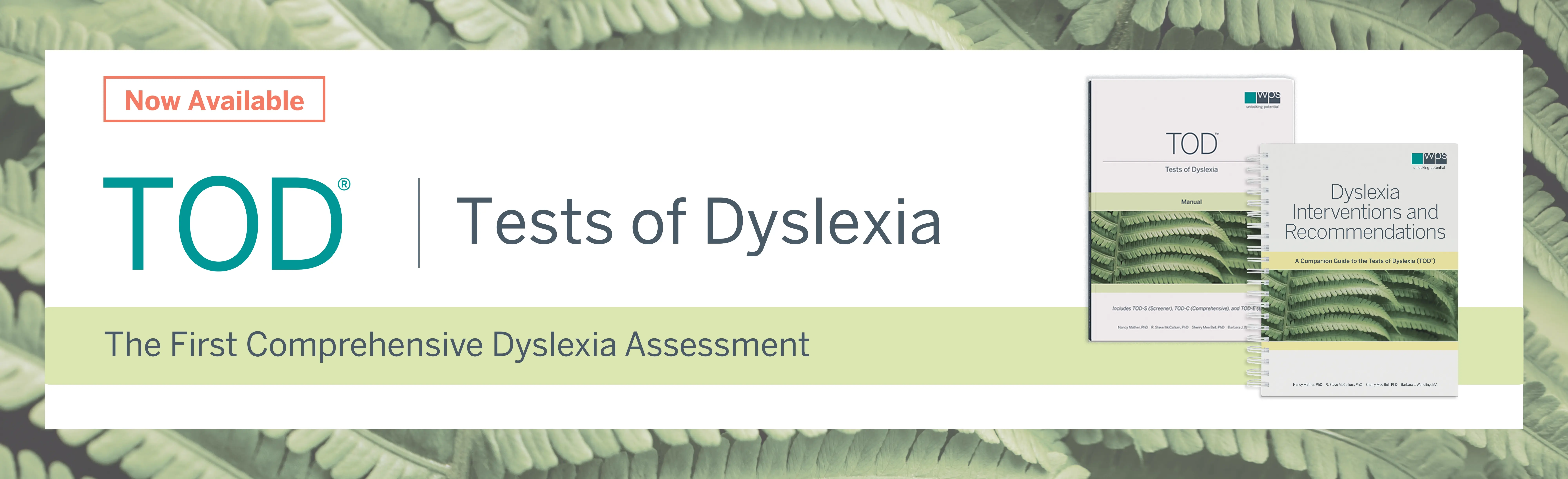
    Now available the Tests of Dyslexia!


    What Are the Most Common Dyslexia Comorbidities?  

    Here’s a brief overview of the conditions most commonly associated with reading disorders like dyslexia.  


    Attention-deficit/hyperactivity disorder (ADHD)  

    ADHD is the most common neurodevelopmental condition to occur alongside dyslexia. Between 25% and 40% of those with one condition also have the other (McGrath & Stoodley, 2019).  


    Other specific learning disorders (SLDs) 

    In studies, between 30% and 47% of those with dyslexia also have dysgraphia symptoms (Chung et al., 2020). Around 26% of those with dyslexia have symptoms of dyscalculia. Dysgraphia and dyscalculia can also occur together—around 36% of the time (Ashraf & Najam, 2020).  


    Developmental language disorder (DLD) or specific language impairment (SLI)  

    A 2019 study published in Child Development found that 43% of 8-year-old children with DLD also had dyslexia and 58% of children with dyslexia had DLD. With DLD/SLI, phonological difficulties may improve over time, but comprehension problems might continue.  

    Learn more about how sex and gender can influence diagnosis of DLD.

    Anxiety 

    Studies show that around 21% of students with SLDs also have anxiety disorder (Visser et al., 2020). Researchers think there is a two-way relationship between anxiety and dyslexia 

    When students are anxious, brain functions such as processing speed, visual attention, and task-switching abilities don’t work as well. That’s why a person with an anxiety disorder may develop reading difficulties. It’s also true that students who are having reading difficulties become anxious when they’re asked to read.  


    Oppositional defiant disorder (ODD) or conduct disorder (CD) 

    For some people, behavior disorders make it harder to learn to read. For others, reading difficulties can eventually lead to behavior problems. An accurate picture can be hard to piece together, especially if symptoms of ADHD are also present (Hendren et al., 2018).   


    Autism 

    Researchers estimate that autism and reading disorders overlap 6%–30% of the time. It’s important to note that when autistic students have difficulty with reading comprehension, it is not usually related to decoding problems (Hendren et al., 2018).   

    Explore the WPS Guide to Autism Assessments and Resources.


    Disabilities 

    When someone has a disability, its characteristics may affect the ability to read. For example, in one recent study, researchers found similar difficulties with word reading, non-word reading, and spelling among deaf students and students with dyslexia (Herman et al., 2019). Similarly, studies have shown that schizophrenia affects phonological processing, reading rate, vocabulary, working memory, and word reading (Vanova et al., 2020).   

    It’s important to understand as much as possible about someone’s background and their daily functioning so you can separate the effects of a disability from the construct you’re measuring. 

    Are Your Assessments Equitable for People with Disabilities? Learn more here.


    What to Consider in an Assessment 

    Here are a few ways to differentiate between dyslexia and other common conditions.  


    Co-occurring condition 

    Similarities 

    Differences 

    Questions to consider 

    ADHD 

    Difficulties with fluency, accuracy, and comprehension 


    Avoidance of reading 

    Students with ADHD may not have trouble with word reading but may skip words or punctuation. Attention may affect comprehension.  

    When ADHD symptoms are treated, is the student better able to read words and learn reading skills? 

    Autism 

    Difficulties with comprehension 


    For some, language impairment 

    Autism is not usually associated with word reading difficulties. 

    Is there an underlying language impairment?  


    Does the student have difficulty decoding words and nonsense words?  


    Does the student work extra hard to read accurately? (Hendren et al., 2018) 

    Behavior disorders (ODD, CD) 

    Attention difficulties, anxiety, task avoidance, reading difficulties in grades 3 and up—especially accuracy (Castro et al., 2020) 


    Difficulties in other academic areas may be present for students with ODD, CD. 

    Do behavior difficulties occur primarily when academic or reading tasks are happening? 


    Did behavior difficulties begin before school age? 

    Other learning disorders 

    Dyslexia & dyscalculia: 

    Difficulties with visual working memory and task shifting, anxiety, lower self-esteem, distraction, or attention difficulties  


    Dyslexia & dysgraphia: 

    Difficulties with spelling, orthographic awareness, and rapid automatized naming (Chung et al., 2020) 


    Phonological processing, rapid naming of numbers and letters, reading tasks, and processing speed do not appear to be affected in students with dyscalculia alone (Haberstroh et al., 2019). 

    Has the student received evidence-based instruction in the specific area of deficit? 


    Which specific skills present difficulties for the student? 


    Does the student have mild motor differences, which may link dysgraphia and dyslexia? 

    DLD/SLI 

    Difficulties with phonological awareness and naming-speed tasks (Snowling et al., 2019) 

    Students with DLD/SLI tend to do better on measures of orthographic processing, reading, semantics, and phonological memory than students with reading disorders alone (Spanoudis et al., 2019). 


    Can the student recognize orthographic patterns? This skill is not impaired in DLD/SLI alone.  


    Are auditory perception, verbal working memory, or processing speed impaired? Deficits could indicate DLD/SLI. 


    Are executive or motor issues also involved in preschool students? Deficits could point to DLD/SLI (Spanoudis et al., 2019). 


    Anxiety 

    Difficulties with working memory, slower reading rate, less motivation to read, avoidance of reading tasks (Katzir et al., 2018), and comprehension problems (Macdonald et al., 2021) 

    Anxiety does not appear to affect untimed word-reading accuracy (Macdonald et al., 2021). 

    Are fatigue or loss of sleep affecting a student’s functioning? 


    Do anxiety interventions improve any reading skills? 


    Does the student experience anxiety only when asked to read? 


    Other key questions: 

    • When did reading difficulties begin?  
    • Do symptoms stay the same across different settings and contexts? 
    • Do dyslexia symptoms change when the other condition is treated? 
    • If a student has a psychological or physical disability, does it affect skills related to reading or taking assessments?


    Key Messages 

    It can take time, experience, and a keen eye to discern between dyslexia and commonly co-occurring conditions. When you’re clear about dyslexia comorbidity, you’ll be better able to work with the student, their family, and your team to focus and prioritize interventions. 

    Download the WPS Dyslexia Assessment Tool Kit


    DYSLEXIA RESOURCES 

    Further Reading on Dyslexia  

    Check Out our Dyslexia Webinars 

     
    Check out our Dyslexia Assessment Toolkit  

    https://www.wpspublish.com/dyslexia-assessment-tool-kit 


    Do you have questions? Check out our Dyslexia FAQs 


    Research and Resources:


    Ashraf, F., & Najam, N. (2020). An epidemiological study of prevalence and comorbidity of non-clinical dyslexia, dysgraphia and dyscalculia symptoms in public and private schools of Pakistan. Pakistan Journal of Medical Sciences, 36(7), 1659–1663. https://doi.org/10.12669/pjms.36.7.2486 

    Castro, E., Cotov, M., Brovedani, P., Coppola, G., Meoni, T., Papini, M., Terlizzi, T., Vernucci, C., Pecini, C., & Muratori, P. (2020). Associations between learning and behavioral difficulties in second-grade children. Children, 7(9), 112. https://doi.org/10.3390/children7090112 

    Chung, P. J., Patel, D. R., & Nizami, I. (2020). Disorder of written expression and dysgraphia: Definition, diagnosis, and management. Translational Pediatrics, 9(Suppl 1), S46–S54. https://doi.org/10.21037/tp.2019.11.01 

    Darweesh, A. M., Elserogy, Y. M., Khalifa, H., Gabra, R. H. & El-Ghafour, M. A. (2020). Psychiatric comorbidity among children and adolescents with dyslexia. Middle East Current Psychiatry27, 28. https://doi.org/10.1186/s43045-020-00035-y 

    Haberstroh, S., & Schulte-Körne, G. (2019). The diagnosis and treatment of dyscalculia. Deutsches Arzteblatt International, 116(7), 107–114. https://doi.org/10.3238/arztebl.2019.0107 

    Hendren, R. L., Haft, S. L., Black, J. M., White, N. C., & Hoeft, F. (2018). Recognizing psychiatric comorbidity with reading disorders. Frontiers in Psychiatry, 9, 101. https://doi.org/10.3389/fpsyt.2018.00101 

    Herman, R., Kyle, F., & Roy, P. (2019). Literacy and phonological skills in oral deaf children and hearing children with a history of dyslexia. Reading Research Quarterly, 54(4), 553–575. https://doi.org/10.1002/rrq.244 

    International Dyslexia Association. (2020). Attention-deficit/hyperactivity disorder and dyslexia. https://dyslexiaida.org/attention-deficithyperactivity-disorder-adhd-and-dyslexia/ 

    Katzir, T., Kim, Y. G., & Dotan, S. (2018). Reading self-concept and reading anxiety in second grade children: The roles of word reading, emergent literacy skills, working memory and gender. Frontiers in Psychology, 9, 1180. https://doi.org/10.3389/fpsyg.2018.01180 

    Macdonald, K. T., Cirino, P. T., Miciak, J., & Grills, A. E. (2021). The role of reading anxiety among struggling readers in fourth and fifth grade. Reading & Writing Quarterly, 37(4), 382–394. https://doi.org/10.1080/10573569.2021.1874580 

    McGrath, L. M., & Stoodley, C. J. (2019). Are there shared neural correlates between dyslexia and ADHD? A meta-analysis of voxel-based morphometry studies. Journal of Neurodevelopmental Disorders, 11(1), 31. https://doi.org/10.1186/s11689-019-9287-8 

    Moll, K., Snowling, M. J., & Hulme, C., (2020). Introduction to the Special Issue “Comorbidities between reading disorders and other developmental disorders.” Scientific Studies of Reading, 24:1, 1–6, DOI: 10.1080/10888438.2019.1702045 

    Snowling, M. J., Nash, H. M., Gooch, D. C., Hayiou-Thomas, M. E., Hulme, C., & Wellcome Language and Reading Project Team (2019). Developmental outcomes for children at high risk of dyslexia and children with developmental language disorder. Child Development, 90(5), e548–e564. https://doi.org/10.1111/cdev.13216 

    Spanoudis, G. C., Papadopoulos, T. C., & Spyrou, S. (2019). Specific language impairment and reading disability: Categorical distinction or continuum? Journal of Learning Disabilities, 52(1), 3–14. https://doi.org/10.1177/0022219418775111 

    Vanova, M., Aldridge-Waddon, L., Jennings, B., Puzzo, I., & Kumari, V. (2021). Reading skills deficits in people with mental illness: A systematic review and meta-analysis. European Psychiatry, 64(1), E19. doi:10.1192/j.eurpsy.2020.98 

    Visser, L., Kalmar, J., Linkersdörfer, J., Görgen, R., Rothe, J., Hasselhorn, M., & Schulte-Körne, G. (2020). Comorbidities between specific learning disorders and psychopathology in elementary school children in Germany. Frontiers in Psychiatry, 11, 292. https://doi.org/10.3389/fpsyt.2020.00292 

    Willcutt, E. G., McGrath, L. M., Pennington, B. F., Keenan, J. M., DeFries, J. C., Olson, R. K., & Wadsworth, S. J. (2019). Understanding comorbidity between specific learning disabilities. New Directions for Child and Adolescent Development, 165, 91–109. https://doi.org/10.1002/cad.20291 


  •  

    Most Effective Method - How to Identify Dyslexia


    Around the world, clinicians and educators identify dyslexia using widely varying methods, a recent international comparison shows (Sadusky et al., 2022). That diversity troubles some researchers. Without a consensus on how the condition is identified, are practitioners missing some diagnoses? If so, students may be missing out on potentially life-changing interventions. 

    In a 2021 study published in Learning Disability Quarterly, researchers addressed the urgency. Study authors wrote, “If a child who is at risk is not identified (false-negative error), the detection of risk is delayed during a period when reading instruction may be most effective, leading to a lifetime of academic difficulty for the student, with potential negative economic and social consequences.”  


    Tests of Dyslexia (TOD®) is now available!


    What do dyslexia researchers have to say about how to identify dyslexia? Here’s a brief overview. 

    1. Start with a universal screener. A universal dyslexia screener can tap those students who are at risk for the condition so that a more thorough evaluation can take place as early as possible. It’s important to look for a single screener that targets the specific skills that predict dyslexia risk. Using lots of different screeners can actually lead to less accurate scores, researchers say (Fletcher et al., 2021).
    2. Assess with a developmentally appropriate tool. Oral language skills, pre-reading skills, and reading skills develop at different ages. That means a dyslexia test needs to measure the right skills at the right developmental stage. For initial screening, some dyslexia specialists recommend assessing students with language difficulties at the end of preschool (Remien & Marwaha, 2022).

      The International Dyslexia Association (IDA) suggests these time frames: 

        • In kindergarten and early first grade, focus on pre-reading skills such as language skills, phonological awareness, memory, and rapid naming. 
        • In the second half of first grade and thereafter, expand assessment to include early word reading, decoding, and spelling. 
    3. Ensure that the assessment tool measures key abilities that point to dyslexia. Identifying dyslexia isn’t as simple as measuring a single cognitive deficit, researchers say (O’Brien & Yeatman, 2021).  That may be because dyslexia is a brain-based condition that can be influenced by lots of different environmental factors.

      Students with dyslexia usually have difficulty with phonological processing. But the condition can also affect a variety of other reading skills and linguistic factors, such as  

        • rapid automatized naming; 
        • auditory working memory; 
        • orthographic processing; 
        • reading accuracy; 
        • oral reading fluency;  
        • comprehension; 
        • vocabulary; and 
        • spelling.

      An effective assessment that’s been validated for dyslexia tracks each of these factors so you can put together a complete picture of the child’s abilities. Learn more about dyslexia characteristics at different ages in this free infographic

    4. Rule out or identify co-occurring conditions that could also cause problems with decoding, spelling, and fluency. Some students with developmental language disorder experience reading difficulties, and neurodevelopmental conditions such as ADHD and other learning disabilities can also overlap with dyslexia (Hendren et al., 2018). It takes time, patience, and skill to isolate and identify dyslexia when people have several conditions at once. 

    5. Select a dyslexia assessment flexible enough to be used for both diagnostic and progress-monitoring purposes. Dyslexia is a brain-based difference. Evidence-based instruction and personalized interventions can lower dyslexia’s impacts, but some differences may outlast even the most robust interventions. Progress monitoring can help you see whether a student is responding—an important factor in identifying dyslexia (Miciak & Fletcher, 2020).

    6. Include information from a variety of sources. A single test can’t reveal everything there is to know about a student. Interviews with parents and teachers; classroom observations; academic progress reviews; data from validated, dyslexia-specific assessment tools—and, crucially, conversations that explore the lived experience of the student—taken together, are the most effective way to identify dyslexia.

    Read more about how to conduct comprehensive dyslexia and reading evaluations.

    This process may sound like a tall order, especially given the number of students in your care. Here’s the good news: When competent, caring practitioners accurately identify dyslexia using these principles, they are simultaneously gathering information needed to build an instructional plan tailored to the individual student.   

    That’s how a world of change is made: one individual student at a time. 


    DYSLEXIA RESOURCES 

    Further Reading on Dyslexia  


    Click Here for Our Dyslexia Webinars 

      • Best Practices in Dyslexia Assessment  
      • Dyslexia 101: Understanding Dyslexia and Its Impact on Reading, Spelling, and Self-Esteem 
      • Challenges in Assessing Dyslexia
      • Introduction to the Tests of Dyslexia (TOD®) 

     
    Check Out Our Dyslexia Assessment Toolkit  


    Do you have questions? Check out our Dyslexia FAQs 


    Research and Resources:


    Fletcher, J. M., Francis, D. J., Foorman, B. R., & Schatschneider, C. (2021). Early detection of dyslexia risk: Development of brief, teacher-administered screens. Learning Disability Quarterly, 44(3), 145–157. https://doi.org/10.1177/0731948720931870 

    Hendren, R. L., Haft, S. L., Black, J. M., White, N. C., & Hoeft, F. (2018). Recognizing psychiatric comorbidity with reading disorders. Frontiers in Psychiatry, 9, 101. https://doi.org/10.3389/fpsyt.2018.00101  

    International Dyslexia Association (n.d.). Testing and evaluation. https://dyslexiaida.org/testing-and-evaluation/ 

    Miciak, J., & Fletcher, J. M. (2020). The critical role of instructional response for identifying dyslexia and other learning disabilities. Journal of Learning Disabilities, 53(5), 343–353. https://doi.org/10.1177/0022219420906801 

    O'Brien, G., & Yeatman, J. D. (2021). Bridging sensory and language theories of dyslexia: Toward a multifactorial model. Developmental Science, 24(3), e13039. https://doi.org/10.1111/desc.13039 

    Remien, K. & Marwaha, R. Dyslexia. (2022). In StatPearls. StatPearls Publishing. https://www.ncbi.nlm.nih.gov/books/NBK557668/ 

    Sadusky, A., Berger, E. P., Reupert, A. E., & Freeman, N. C. (2022). Methods used by psychologists for identifying dyslexia: A systematic review. Dyslexia, 28(2), 132–148. https://doi.org/10.1002/dys.1706. 


  •  

    Dyslexia is a specific learning disorder that causes reading difficulties. Despite that simple definition, this developmental condition is heterogenous: It can look different from person to person. Given dyslexia’s variations, how can you ensure that an assessment will identify the condition in the particular student you’re evaluating? 


    Now available - Tests of Dyslexia (TOD)


    Here are five practical questions to help you choose the right dyslexia assessment for each person.  

    First, the basics. 


    What are the testing and documentation requirements in your state? 

    State legislatures and departments of education have varying requirements for identifying dyslexia and other learning disorders. Some require validated test measures. Others specify that certain components of reading, writing, or spoken language be included in an assessment. Knowing your state and local requirements can narrow the scope of your test search. 


    Are the tests you’re considering valid and reliable for predicting dyslexia?  

    Identifying dyslexia is based, in part, on assessments that have been validated for dyslexia and that are considered reliable in identifying the condition over time. A validated test is one that accurately measures the indicators of dyslexia. A reliable assessment leads to results that can be reproduced under the same conditions, time after time.  

    Now for differentiation.  

    What are your student’s unique needs? 

    The age, primary language, and health profile of each student are important considerations when you’re looking for a suitable assessment. For example, students learn different pre-reading and reading skills at different ages, so it’s important to choose a test that is developmentally appropriate.   

    It’s also important to consider whether a test is available in the language your student needs. If you use a test in a language other than the student’s primary language, a low score may or may not indicate dyslexia.  

    Another important factor is the test platform. An online or telehealth assessment may be a better fit for some students; a traditional paper/pencil assessment may work better for others.  

    If the student you’re assessing has a neurodevelopmental condition, health condition, or disability, you’ll want to think about whether the test is compatible with the accommodations that student needs. 

    It’s also important to factor in your own needs. 

    The right dyslexia assessment should also meet your needs as an evaluator. You’ll need tests you can administer in a reasonable timeframe, in a form you can use, and at a price point that makes sense for your school or clinic budget.  

    You may also want to think about questions like these: 


    How easy will it be to create reports and intervention plans based on the test? 

    Research makes it clear that dyslexia assessment needs to be nested within multitiered systems of support (Miciak & Fletcher, 2020). Screening, diagnostic evaluations, effective tier-1 teaching, progress monitoring, and interventions are crucial supports for all reading students—especially those with dyslexia.  

    A good dyslexia assessment helps educators and clinicians clarify which specific components of reading need to be addressed and monitored. Matching needs to interventions can be time-consuming, so it’s a good idea to look for dyslexia assessments that suggest or provide intervention plans aligned with the Science of Reading. 


    What supports might you need during the evaluation? 

    The International Dyslexia Association (IDA) Knowledge and Practice Standards for Teachers of Reading say educators should be able to understand, integrate, and communicate the data from diagnostic assessments (IDA, 2018). So it’s a good idea to participate in training before you use an assessment, particularly if  

    • you’re unfamiliar with the test; 
    • the test has been revised since you last used it; or 
    • your student’s needs are unique. 

    You can reach out to a colleague, consult with the test publisher, or take advantage of online workshops or other training opportunities 


    The Key Message

    Dyslexia evaluations serve many purposes. The results often mean a student can qualify for services, resources, academic placement, or accommodations. Assessment results can also help teachers specialize the instruction and interventions they offer an individual student. And a dyslexia diagnosis can alleviate worry and frustration for some students and their families, because it places reading difficulties in context.  

    Whatever prompts an evaluation, know that the time you spend carefully matching dyslexia assessments to the individual needs of each student—and to your own needs—can lead to life-changing interventions for the people in your care.

    Want to know more? Download the WPS Dyslexia Assessment Tool Kit. 


    DYSLEXIA RESOURCES 

    Further Reading on Dyslexia  


    Check Out our Dyslexia Webinars 

     
    Check out our Dyslexia Assessment Toolkit  


    Do you have questions? Check out our Dyslexia FAQs 


    Research and Resources:


    Ahmed, I., & Ishtiaq, S. (2021). Reliability and validity: Importance in medical research. The Journal of the Pakistan Medical Association, 71(10), 2401–2406. https://doi.org/10.47391/JPMA.06-861 

    International Dyslexia Association. (2018). Knowledge and practice standards for teachers of reading. https://dyslexiaida.org/knowledge-and-practices/ 

    Miciak, J., & Fletcher, J. M. (2020). The critical role of instructional response for identifying dyslexia and other learning disabilities. Journal of Learning Disabilities, 53(5), 343–353. https://doi.org/10.1177/0022219420906801 

    Shah, H. R., Sagar, J., Somaiya, M. P., & Nagpal, J. K. (2019). Clinical practice guidelines on assessment and management of specific learning disorders. Indian Journal of Psychiatry, 61(Suppl 2), 211–225. https://doi.org/10.4103/psychiatry.IndianJPsychiatry_564_18 


  •  

    At least 40 states now mandate dyslexia screening for students as early as kindergarten. That’s a big step forward, because early intervention is the key to better outcomes for students with reading difficulties (Fletcher et al., 2021).  

    But dyslexia screening—even when screeners are accurate and easy to use—are just step one. Thorough dyslexia evaluations are notoriously complex, largely because so many skills must meld to make a good reader, and because dyslexia can be caused by a variety of developmental differences (Sanfilippo et al., 2020).  

    Once a screener identifies an at-risk student, the hard work really begins. Here’s what studies show are some of the most common shortfalls educators experience when assessing for dyslexia. 


    The Tests of Dyslexia (TOD®) is now available!


    Five Shortcomings of Dyslexia Assessments and How to Address Them


    Shortfall #1Universal screeners aren’t always given at the right stage.

    Early screeners can catch delays or deficits in foundational skills as early as kindergarten or first grade. Pediatricians may even screen for dyslexia risk before children enter school (Sanfilippo et al., 2020). But some researchers think these screeners may not predict risk for reading difficulties as well as those that are given once the instructor has begun teaching the child to read and monitoring their progress. 

    What you can do: If you practice in a state that mandates screening in kindergarten, you may want to pay special attention to phonological awareness and letter–sound naming tasks. Researchers say that, in kindergarten, these two skill areas seem to be the best predictors of reading difficulties (Fletcher et al., 2021). 


    Shortfall #2Piecing together numerous assessments is complicated. 

    Dyslexia is a specific learning disorder that results in reading difficulties. It’s developmental, which means it is associated with brain differences that emerge as a child grows and develops. Those structural and functional brain differences mean that people with dyslexia often have language issues before reading difficulties become clear.  

    For that reason, dyslexia evaluations often involve language assessments in addition to comprehensive reading assessments. It can take a lot of time to compare the results of these assessments—and then you must balance these scores with what you know about the child’s family history, prior exposure to language, academic performance, co-occurring conditions like ADHD and autism (both of which are associated with higher dyslexia risk) and other factors (Sawyer & Jones, n.d.). It’s a very tall order. 

    What you can do:  Make sure all stakeholders, including parents, caregivers, administrators, and other members of your team, understand and share in the planning process. It’s a good idea to spend some time educating people about  

    • what dyslexia is and isn’t, 
    • the risks involved in rushing the process, 
    • the likely timeline, 
    • the importance of each person’s contribution, 
    • the reason for gathering each kind of data, and 
    • the services and supports available to them. 

    When families, caregivers, and readers are well-educated about the process, tensions are likely to be lower (Sahu et al., 2018). While that won’t add hours to your day or days to your deadline, it may cut down on some of your stress. 

    Want to know more? Download the WPS Dyslexia Assessment Tool Kit


    Shortfall #3:  Designing interventions to suit each reader can be overwhelming.

    During an evaluation, the clock is loudly ticking. Anxious parents await a diagnosis. Students need to begin effective instruction. And deadlines for drafting IEPs, 504 plans, and other documentation can create stress for educators and clinicians.  

    What you can do:  Look for assessments that provide or describe differentiated interventions. Five decades of research back up the Science of Reading. To make planning simpler, use interventions that are proven to work and that are aligned with both the Science of Reading and the assessments you conduct. 


    Shortfall #4: It’s hard to feel confident that an assessment lines up with the Science of Reading.

    There’s no shortage of reading assessments on the market—and, as a practitioner, you are aware how little time there is to waste on redundant or ineffective assessments in an already packed school year.  

    Right now, many educators and practitioners are finding out that there is a sizeable gap between the Science of Reading and the reading instruction that has taken place over the last several decades. It’s vital that the assessments and interventions you choose reflect current research.  

    What you can do:  If you’re not certain what skills should be measured in a reading assessment, or what postassessment instruction should look like, explore the Science of Reading. Evaluate the assessments in use where you are. Do they line up with what research shows about dyslexia? If not, it’s a good opportunity to advocate for change. 


    Shortfall #5A comprehensive dyslexia assessment is costly.

    A full battery of assessments to verify a dyslexia diagnosis can come with a significant price tag. Add assessments to determine whether a student is experiencing anxiety or depression, which often accompany learning disorders, and the cost ticks upward.  

    What you can do: To lower costs, you may want to choose individual assessments that are as comprehensive as possible and which can reliably predict dyslexia.


    Key Messages

    Identifying dyslexia is a multistep process that often takes place under pressure. Practitioners must collaborate with students, caregivers, educators, and other health professionals. It can take time to conduct assessments, consider the results, draft interventions, and communicate with everyone involved. When there are inefficiencies, the process can frustrate those at the center of the evaluation. 

    If your dyslexia evaluations seem to be coming up short, it may help to select assessments that give you the information you need in a practical timeframe. Using reliable, comprehensive assessments that also integrate screeners, diagnostic measures, and interventions can help simplify the process—leaving you a little more time to interact with the students and families affected by dyslexia.

    WPS has released the Tests of Dyslexia (TOD®), a comprehensive assessment that includes: 

    • TOD-S, a quick dyslexia screener to help you identify students at risk for the condition; 
    • TOD-E, a comprehensive diagnostic assessment you can use to identify dyslexia in students in kindergarten through Grade 2;  
    • TOD-C, a comprehensive diagnostic assessment for identifying dyslexia in students Grade 1 through adulthood; and 
    • an evidence-based intervention planner to help you build reading skills and prevent loss of learning and self-esteem in students with dyslexia. 

    Aligned with the Science of Reading, the TOD’s broad focus encompasses the full range of language, pre-reading, and reading skills that can be affected by dyslexia. And the intervention component can save you time and money, making it easier to complete IEPs, 504 plans, and other intervention documents on time.  

    Find out more about the TOD in this free webinar.


    DYSLEXIA RESOURCES

    Further Reading on Dyslexia 

    Webinars on Dyslexia


    Research and Resources:


    Fletcher, J. M., Francis, D. J., Foorman, B. R., & Schatschneider, C. (2021). Early detection of dyslexia risk: Development of brief, teacher-administered screens. Learning Disability Quarterly, 44(3), 145–157. https://doi.org/10.1177/0731948720931870 

    Sahu, A., Bhargava, R., Sagar, R., & Mehta, M. (2018). Perception of families of children with specific learning disorder: An exploratory study. Indian Journal of Psychological Medicine, 40(5), 406–413. https://doi.org/10.4103/IJPSYM.IJPSYM_148_18 

    Sanfilippo, J., Ness, M., Petscher, Y., Rappaport, L., Zuckerman, B., & Gaab, N. (2020). Reintroducing dyslexia: Early identification and implications for pediatric practice. Pediatrics, 146(1), e20193046. https://doi.org/10.1542/peds.2019-3046 

    Sawyer, D. J., & Jones, K. M. (n.d.) Testing and evaluation fact sheet. https://dyslexiaida.org/testing-and-evaluation/ 


  •  

    How Practitioners Can Help With Poor Interoception

    Researchers have known for some time that autism spectrum disorder (ASD) can disrupt the ability to sense body signals such as pain, hunger, and thirst—a skill known as interoception. Several recent studies shed new light on the ways autism, attention-deficit/hyperactivity disorder (ADHD), and ASD + ADHD can dysregulate interoception.  

    If you’re working with a client with disrupted body awareness, researchers have some recommendations about how you can help. 


    What is interoception and why does it matter? 

    It’s the ability to understand the body’s messages. Interoception helps people know when they’re hungry or thirsty, when and where their body hurts, when they need to rest or use the bathroom, and any number of other physiological signals that help people stay healthy.  

    Interoception also includes awareness of more subtle signals like heartbeat and breath—two signs that could help someone realize they’re becoming upset or anxious. For that reason, interoception is linked to the ability to manage or regulate emotions (Price & Hooven, 2018). Managing emotions can be challenging with autism and ADHD. 

    Interoception is complex. It involves at least three separate abilities: 

    • noticing body signals 
    • perceiving or interpreting them accurately  
    • knowing how good you are at understanding body signals  

    Each of these elements can be affected by autism, ADHD, and ASD + ADHD (Kutscheidt et al., 2019; Yang et al., 2022). For some people, the ability to talk about their physical state can also be impaired. 


    How can autism and ADHD change body awareness? 

    In a recent study published in the Journal of Personalized Medicine, researchers describe several ways interoception can be disrupted by autism and ADHD (Edelson et al., 2022):  

    1. Poor interoception can make people extra sensitive or extra attentive to signals from their bodies. 
    2. It may make people less aware of bodily sensations. That, in turn, may lead to a higher pain tolerance that makes illness and injuries harder to diagnose. 
    3. People with interoceptive differences may be aware that something is wrong but may have a hard time pinpointing what or where the problem is.  
    4. Dysregulated interoception can create more anxiety. In some cases, anxiety can lead to extra stimming behaviors, aggression, self-injury, or violent behavior. 


    What do researchers recommend? 

    As a practitioner, you can help clients and their caregivers recognize when interoception isn’t working as it should. Researchers recommend these practical steps (Edelson, 2022). 

    Find out more with focused assessments 

    Assessing functional, adaptive behavior and executive function can help you track how emotions change in different environments and under varying conditions. That information can help you determine how interoception might be affected. It can also yield valuable insights into physical symptoms. Sensory processing and integration assessments are another important tool for understanding interoceptive issues. And since anxiety is common with autism and ADHD, anxiety screeners and assessments can be particularly useful. 


    Conners 4


    Recommend medical and physical exams 

    Autism and ADHD often co-occur with medical conditions such as sleep loss and gastrointestinal problems. If a client isn’t accurately reading symptoms, it’s especially important to work with healthcare providers to identify any underlying health conditions that may need to be treated. 


    Educate clients and caregivers 

    A growing body of evidence suggests that some people can learn better interoceptive skills. In a study published in Occupational Therapy International, researchers found that autistic children who practiced identifying body signals and linking them to their emotions were better able to regulate their emotions afterward (Mahler et al., 2022). Researchers used the Behavior Rating Inventory of Executive Function, Second Edition (BRIEF2) and the Caregiver Questionnaire for Interoceptive Awareness, Second Edition (CQIA-2) to track changes before and after the program. 

    You can also help educate caregivers about how to recognize signs that someone is experiencing pain, hunger, or another physical need. Caregivers can take steps to manage environmental features such as noise and temperature to prevent discomfort and anxiety.  


    The Key Message 

    Interoception—the ability to accurately sense what is happening in the body—can be disrupted with autism, ADHD, or ASD + ADHD. Though it isn’t a problem for everyone, it can cause physical and mental health problems for those with interoceptive differences.   

    Focused assessments, regular medical care, and interoceptive education can help autistic people, those with ADHD or ASD + ADHD, and their caregivers adjust their environments and care for their overall well-being.  


    Related Assessments: 


    Research and Resources:


    Edelson S. M. (2022). Understanding challenging behaviors in autism spectrum disorder: A multi-component, interdisciplinary model. Journal of Personalized Medicine, 12(7), 1127. https://doi.org/10.3390/jpm12071127 

    Kutscheidt, K., Dresler, T., Hudak, J., Barth, B., Blume, F., Ethofer, T., Fallgatter, A. J., & Ehlis, A. C. (2019). Interoceptive awareness in patients with attention-deficit/hyperactivity disorder (ADHD). Attention Deficit and Hyperactivity Disorders, 11(4), 395–401. https://doi.org/10.1007/s12402-019-00299-3 

    Mahler, K., Hample, K., Jones, C., Sensenig, J., Thomasco, P., & Hilton, C. (2022). Impact of an interoception-based program on emotion regulation in autistic children. Occupational Therapy International, 2022, 9328967. https://doi.org/10.1155/2022/9328967 

    Price, C. J., & Hooven, C. (2018). Interoceptive awareness skills for emotion regulation: Theory and approach of mindful awareness in body-oriented therapy (MABT). Frontiers in Psychology, 9, 798. https://doi.org/10.3389/fpsyg.2018.00798  

    Yang, H. X., Zhou, H. Y., Li, Y., Cui, Y. H., Xiang, Y., Yuan, R. M., Lui, S., & Chan, R. (2022). Decreased interoceptive accuracy in children with autism spectrum disorder and with comorbid attention-deficit/hyperactivity disorder. Autism Research, 15(4), 729–739. https://doi.org/10.1002/aur.2679 


  •  

    Psychological assessments and interventions can unlock potential—on individual and societal levels. As a leading publisher of educational and clinical assessments, we understand that we have a role to play in helping to reduce health and education disparities that disproportionately affect people in historically excluded communities.

    Here is a look at a few of the steps we take—some with a long history and others that are more recent initiatives—to make our assessments and our workplace more inclusive.


    We’re transparent with testing norms data. 

    Like other assessment publishers, we norm our tests to be as broadly representative as possible, using U.S. census data as our guide. You can always find our demographic data in our assessment manuals. If you are not sure about whether a normative sample is a good match for someone you’re evaluating, WPS assessment consultants are available to discuss the data and help you plan the most effective assessment strategy. 


    We’re listening to diverse voices.  

    We’ve established diverse panels of subject matter experts to help us identify any hidden bias towards or against a variety of groups, from gender to ethnicity and race, culture, socioeconomic status, and more. These panels also review re-released assessments and interventions to ensure that our products evolve to meet the needs of the communities we serve. If you spot a test item that gives you pause, let us know. We value the voices of our partners.  


    We know languages matter.

    Researchers, educators, and clinicians have long debated whether people should be assessed in their home language or in a language they may still be learning. To broaden available options, WPS has translated products into more than 100 languages. We work with native speakers who are subject matter experts to ensure translations are valid and reliable across languages and dialects. When translating our rating scales into Spanish, we also collect standardization data on Spanish items to ensure equivalency in the norming process.  


    We continue to develop cultural competence resources. 

    It can be a challenge to adapt assessments to clients of varying backgrounds and abilities. Our assessment consultants aren’t just experts on the assessments we publish. They have decades of experience in occupational therapy, speechlanguage pathology, special education, and school psychology. They’re available to help you modify and adapt assessments to meet your clients’ varied needs. 


    We’ve made our resources accessible to a wider audience.

    WPS was the first assessment publisher to add accessibility software to our website, enabling people with varied disabilities to have easier access to our online resources. In addition, many of our assessments are available with both paper and online assessment-scoring options to meet individual needs. Online assessments can make it easier to evaluate people living in rural communities, where limited access contributes to health and education disparities 


    We’ve lowered prices and made many resources free.

    We’ve lowered the price of many digital products to make them more affordable. Our Graduate School Alliance program offers free resources to educators who train up-and-coming practitioners. Those practitioners can also receive free assessments and educational resources.  

    And for experienced professionals, we offer ongoing education and CE credits through our Learning Management System (LMS) and free assessment and intervention training for organizations with 10 or more people. We also publish our most recent research, webinars, tutorials, and news updates on our website, social media, and YouTube channels so you can find the answers you need. 


    We’ve expanded our editorial guidelines.

    Our clients are a diverse group of clinicians, practitioners, and educators from across the U.S. and around the globe. Our staff and our published content reflect that diversity. Our editorial staff carefully curates images and uses inclusive language in the content we produce relating to race, ethnicity, gender, sexual orientation, economic class, faith, and disability. Every WPS employee participates in substantive diversity, equity, and inclusion training so we can continue building a safe, welcoming, and equity-focused company culture. 


    We welcome your feedback.

    As we expand our efforts to increase representation, we invite you to join our engaged and diverse team of practitioners to help with data collection for new assessments. You can learn more by contacting our assessment consultants.  

    If you’d like to report an issue with bias, please reach out to us 

    WPS is working to make our assessments accessible, relevant, and impactful to as many people as possible. We see you as our partners, and your perspective, lived experience, and feedback are so important to us. Thank you for the good work you to do bring better health and educational outcomes to all the clients you serve.  


    Research and Resources:


    American Psychological Association. (2021). Inclusive language guidelines. https://www.apa.org/about/apa/equity-diversity-inclusion/language-guidelines.pdf 

    National Institute of Minority Health and Health Disparities. (n.d.). Abstract: Rural health disparities: The interface of research, policy, and public trust. https://www.nimhd.nih.gov/programs/edu-training/hd-seminars/2012/jan/abstract.html 

    Sugarman, J., & Villegas, L. (2020). Native language assessments for K-12 English learners policy considerations and state practices. https://www.migrationpolicy.org/sites/default/files/publications/MPI-native-lang-assessments_FINAL.pdf 


  •  

    ADHD Life Span: How Long Do Symptoms Last?


    ADHD and menopause are making headlines, renewing conversations about how ADHD symptoms can change as people mature. Evidence shows that ADHD symptoms generally decline with age, but for some people symptoms carry over from childhood to adulthood (Vos & Hartman, 2022).  

    Because most ADHD research focuses on children, less is known about how symptom profiles change as people move into adolescence and adulthood. What do practitioners need to know about how ADHD looks and feels at different life stages? 


    Early Childhood

    ADHD is often classified in one of three types:

    • hyperactive/impulsive, characterized by high energy, lots of movement, frequent risk-taking, and difficulty staying on task 
    • inattentive, characterized by distractibility, trouble remembering, and difficulty following through on long-term or complex tasks 
    • combined type, characterized by both inattentive and hyperactive/impulsive symptoms (National Institute of Mental Health, 2021) 

    It’s important to note that these characteristics are based on diagnostic criteria. They don’t reflect the strengths and abilities associated with ADHD, including charisma, hyperfocus, and creativity, among others.  

    ADHD symptoms can show up as early as the toddler years (Brown & Harvey, 2018). Young children with ADHD often have more externalizing symptoms, meaning those that are outwardly directed and easily observable. These symptoms include 

    • being fidgety, restless, or overly active;  
    • talking excessively; 
    • interrupting or blurting out; 
    • behaving impulsively; 
    • losing things; and 
    • having trouble with organization and follow-through on tasks (King et al., 2018). 

    Behaviors like these can disrupt classrooms, which explains why ADHD is often diagnosed once children start school.  

    It’s also important to note that sex and gender can affect how ADHD symptoms appear, even at this early stage. Inattention, for example, is more common among those assigned female at birth. Since inattention is less likely than hyperactivity to attract attention in a classroom, ADHD can be easier to spot in those assigned male at birth.  


    Teen Years

    Evidence explaining the relationship of puberty, hormones, and ADHD symptoms is conflicting. Some studies have linked hormone fluctuations to worsening ADHD symptoms; others don’t show a clear connection between the two.  

    It is clear that ADHD symptom profiles shift in the teen years. Inattentive symptoms become more apparent, leading to academic difficulties as schoolwork becomes more demanding. Hyperactivity often declines. In adolescence, ADHD symptoms can lead to

    • risk-taking; 
    • early, frequent sexual experiences; 
    • substance use; 
    • anxiety and depression; 
    • more frequent auto accidents among those who drive; and 
    • higher risk of pregnancy and sexually transmitted infections (Antoniou et al., 2012; Curry et al., 2017;  Özgen et al., 2021; Norén Selinus et al., 2016). 

    Learn more: Why It's So Important to Assess Executive Function in Children with ADHD

    Adulthood  

    ADHD symptoms persist into adulthood for 35%–65% of those diagnosed with the condition (Owens et al., 2016). Even so, in young adulthood, symptoms decrease for many people. When symptoms persist, ADHD can lead to 

    • lower income, 
    • greater risk of occupational disability, 
    • more time lost from work, and 
    • less educational attainment (Jangmo et al., 2021). 

    Researchers think emotional dysregulation, school and discipline problems, anxiety, depression, and social rejection play a big role in these outcomes (Owens et al., 2016). It’s important to note, however, that people with ADHD often compensate for symptoms in ways that help them to adapt and build new skills (Merkt et al., 2015). 

    In a 2018 review of the literature, Franke et al. described symptoms as “internal restlessness, ceaseless unfocused mental activity, and a difficulty focusing on conversation.” Researchers also noted problems with impulse control, attention switching, emotional responses, and problem-solving. 

    Few studies focus on the ways ADHD affects people who are pregnant or postpartum. During these periods of intense hormonal change, people may notice

    • greater distraction and more trouble focusing; 
    • depression, especially as estrogen and dopamine levels drop; and 
    • lower self-esteem. 

    When a birthing parent has ADHD, it’s 20%–30% more likely they’ll need a caesarean section.  Many women who were incorrectly diagnosed with an anxiety or mood disorder earlier in life finally receive an ADHD diagnosis once their children do (Antoniou et al., 2021).  

    Learn More: Lived Experiences—ADHD in Girls & Women

    Later Adulthood

    Researchers agree that, for many people, ADHD life span symptoms decrease with age. It’s important to understand, however, that research also shows ADHD is “under-recognized and under-treated” in older adults. Some researchers have referred to older adults as the “blind spot” in ADHD research (Vos & Hartman, 2022).  

    It’s known that when estrogen levels drop during perimenopause and menopause, ADHD symptoms increase sharply for many women. Researchers think the surge in symptoms may be related to lower dopamine and lower estrogen levels. Trouble with focus or concentration, along with mood disorders, can result (Antoniou et al., 2021).  


    Conners 4 is Available on the WPS®  Online Evaluation System


    Other Factors to Consider

    Changing comorbidity profiles. ADHD often co-occurs with other conditions. At varying times, the symptoms of those disorders may also change. Symptoms of other conditions may overshadow ADHD symptoms or cause more functional problems at different life stages.  

    Changing responses to treatment. Beginning in school-age children, medication is a first-line treatment, and it is associated with better lifelong outcomes. Even so, ADHD medications may need to be re-evaluated in pregnant or nursing people and in older adults taking medications for other health conditions. 


    Key Messages

    ADHD symptoms may look more like hyperactivity and impulsivity early in childhood, especially among people assigned male at birth. In the teen years, inattentiveness and risk-taking behaviors may become more prominent. For many, inattentiveness and lack of focus persist into adulthood, when changing hormones can cause symptom surges. Early intervention, treatment, follow-up, and compensatory skills can lead to better outcomes at every age. 


    Related Assessments: 


    Further Reading on ADHD


    Research and Resources:


    Antoniou, E., Rigas, N., Orovou, E., Papatrechas, A., & Sarella, A. (2021). ADHD symptoms in females of childhood, adolescent, reproductive and menopause period. Materia Socio-Medica, 33(2), 114–118. https://doi.org/10.5455/msm.2021.33.114-118 

    Brown, H., & Harvey, E. (2018). Psychometric properties of ADHD symptoms in toddlers. Journal of Clinical Child & Adolescent Psychology, 48, 1–17. https://doi.org/10.1080/15374416.2018.1485105 

    Curry, A. E., Metzger, K. B., Pfeiffer, M. R., Elliott, M. R., Winston, F. K., & Power, T. J. (2017). Motor vehicle crash risk among adolescents and young adults with attention-deficit/hyperactivity disorder. JAMA Pediatrics, 171(8), 756–763. https://doi.org/10.1001/jamapediatrics.2017.0910 

    Franke, B., Michelini, G., Asherson, P., Banaschewski, T., Bilbow, A., Buitelaar, J. K., Cormand, B., Faraone, S. V., Ginsberg, Y., Haavik, J., Kuntsi, J., Larsson, H., Lesch, K. P., Ramos-Quiroga, J. A., Réthelyi, J. M., Ribases, M., & Reif, A. (2018). Live fast, die young? A review on the developmental trajectories of ADHD across the lifespan. European Neuropsychopharmacology, 28(10), 1059–1088. https://doi.org/10.1016/j.euroneuro.2018.08.001 

    Jangmo, A., Kuja-Halkola, R., Pérez-Vigil, A., Almqvist, C., Bulik, C. M., D'Onofrio, B., Lichtenstein, P., Ahnemark, E., Werner-Kiechle, T., & Larsson, H. (2021). Attention-deficit/hyperactivity disorder and occupational outcomes: The role of educational attainment, comorbid developmental disorders, and intellectual disability. PloS One, 16(3), e0247724. https://doi.org/10.1371/journal.pone.0247724 

    King, K. M., Luk, J. W., Witkiewitz, K., Racz, S., McMahon, R. J., Wu, J., & Conduct Problems Prevention Research Group. (2018). Externalizing behavior across childhood as reported by parents and teachers: A partial measurement invariance model. Assessment, 25(6), 744–758. https://doi.org/10.1177/1073191116660381 

    Merkt, J., Reinelt, T., & Petermann, F. (2015). A framework of psychological compensation in attention deficit hyperactivity disorder. Frontiers in Psychology, 6, 1580. https://doi.org/10.3389/fpsyg.2015.01580 

    National Institute of Mental Health. (2021). Attention-deficit/hyperactivity disorder in children and teens: What you need to know. https://www.nimh.nih.gov/health/publications/attention-deficit-hyperactivity-disorder-in-children-and-teens-what-you-need-to-know  

    Norén Selinus, E., Molero, Y., Lichtenstein, P., Anckarsäter, H., Lundström, S., Bottai, M., & Hellner Gumpert, C. (2016). Subthreshold and threshold attention deficit hyperactivity disorder symptoms in childhood: Psychosocial outcomes in adolescence in boys and girls. Acta Psychiatrica Scandinavica, 134(6), 533–545. https://doi.org/10.1111/acps.12655 

    Owens, E. B., & Hinshaw, S. P. (2016). Childhood conduct problems and young adult outcomes among women with childhood attention-deficit/hyperactivity disorder (ADHD). Journal of Abnormal Psychology, 125(2), 220–232. https://doi.org/10.1037/abn0000084 

    Özgen, H., Spijkerman, R., Noack, M., Holtmann, M., Schellekens, A., Dalsgaard, S., van den Brink, W., & Hendriks, V. (2021). Treatment of adolescents with concurrent substance use disorder and attention-deficit/hyperactivity disorder: A systematic review. Journal of Clinical Medicine, 10(17), 3908. https://doi.org/10.3390/jcm10173908 

    Vos, M., & Hartman, C. A. (2022). The decreasing prevalence of ADHD across the adult lifespan confirmed. Journal of Global Health, 12, 03024. https://doi.org/10.7189/jogh.v 


  •  

    Using a Treatment-Informed Evaluation Framework  


    This post is based on the upcoming webinar What Am I Treating? Case Conceptualization and Treatment-Informed Evaluation (TIE) in Childhood Developmental, Behavioral, and Emotional Disorders," presented by Sam Goldstein, PhD. 


    Comprehensive evaluations—in which an evaluator considers information provided by different contributors, in varied settings, with multiple assessments—produce a lot of data, possibly even an overwhelming amount of data. To make sense of the volumes of information, Sam Goldstein, PhD, uses a treatment-informed framework to ensure that comprehensive evaluations lead to holistic, effective treatments.  


    What is treatment-informed evaluation?  

    Much of the time, evaluations focus on obtaining a diagnosis or determining eligibility for services—both worthy and important objectives. Treatment-informed evaluations (TIE), Goldstein says, refocus the lens so an evaluation is oriented toward planning, delivering, and monitoring treatment. The goal is to “see the world through the child’s eyes .. . focusing on what the child can see, feel, and do.” 


    What’s included in a TIE?

    A treatment-informed evaluation must be comprehensive, so the evaluator has a clear picture of the functional life of the child at the center of the evaluation. Components often 

    • measure brain-based skills that shape how a person thinks, learns, feels, and behaves; 
    • build your understanding of how skills influence each other and shape a person’s response to the environment; 
    • identify functional limitations or impairments; and 
    • point to causes and prescribe targeted interventions. 


    How is a TIE conducted?  

    Goldstein recommends a logical, structured approach to comprehensive evaluations because children at the highest risk usually experience multiple challenges and needs.  

    A good starting place is a review of available records, so you can get a sense of what has already been documented. Parent and teacher checklists can give you valuable information about symptoms and their severity, as well as how the child functions and adapts day to day. Classroom observations can yield more useful data, augmented by your in-person interview with the child at the heart of the evaluation. Here’s what that process could look like step by step: 


    Step 1. Understand the individual’s complex history.   

    The documents available to you may depend on the age of the person you’re evaluating. When possible, review documents and interview parents, teachers, and health professionals to create a rich, vivid picture of 

    • educational history, 
    • developmental history, 
    • occupational and pre-occupational history, 
    • personal and medical history, and 
    • psychiatric history. 

    It’s important to understand the nature of any trauma, as well as new or long-term symptoms your client is experiencing. An evaluator conducting a TIE keeps a clear appreciation of the client’s goals top of mind throughout the information-gathering process. 


    Step 2. Assess for impairment. 

    As you plan which assessments to use, Goldstein recommends that you spend some time considering these test characteristics: 

    • the sensitivity of a test, meaning its ability to correctly identify people with a condition 
    • the specificity of a test, meaning its ability to determine who does not have a condition 
    • the positive predictive value of a test, or the likelihood that a person who tests positive actually has the condition 
    • the negative predictive value of a test, or the likelihood that a person who tests negative actually does not have the condition  

     It’s also important to look for low-incidence conditions and disabilities such as vision and hearing impairments.  


    You may want to consider these assessments: 

    Rating Scale of Impairment (RSI) 

    Comprehensive Executive Function Inventory (CEFI®) 

    Comprehensive Executive Function Inventory Adult (CEFI Adult)  

    Risk Inventory and Strengths Evaluation (RISE®) 


    Step 3: Assess a broad spectrum of abilities and behaviors.  

    In this phase of the evaluation, you’re gathering information on symptoms, skills, and abilities using valid, reliable, normative measures. These assessments can help you clarify and test some of the hypotheses you may have developed based on the history and impairments you have observed.  


    You may want to consider these tests: 

    Conners, Third Edition (Conners 3) 

    Conners Comprehensive Behavior Rating Scales (Conners CBRS®) 

    Conners Early Childhood (Conners EC) 


    Step 4: Choose narrow-spectrum tools.  

    With a TIE framework, you can decide on narrow-spectrum measures based on which areas or symptoms are most disruptive to the life or well-being of your client.  


    Tests like these may be helpful to you as you clarify a diagnosis and plan treatments: 

    Autism Spectrum Rating Scales (ASRS®) 

    Autism Diagnostic Interview–Revised (ADI®-R)  

    Social Responsiveness Scale, Second Edition (SRS™-2) 

    Adaptive Behavior Assessment System, Third Edition (ABAS®-3) 

    Children’s Depression Inventory, Second Edition (CDI 2®) 

    Revised Children’s Manifest Anxiety Scale, Second Edition (RCMAS-2) 


    Step 5: Assess achievement and social functioning.​ 

    As you assess achievement and social functioning, the goal is to develop an understanding of the individual as a whole—not as a collection of deficits but as an individual with strengths and skills living in environments that offer varying levels of support. 


    Here are some of the common assessments used in this phase: 

    Monteiro Interview Guidelines for Diagnosing the Autism Spectrum, Second Edition (MIGDAS-2) 

    Autism Diagnostic Observation Schedule, Second Edition (ADOS®-2) 

    Weschler Intelligence Scale for Children 

    Woodcock-Johnson Tests of Cognitive Abilities 


    Step 6: Assess resilience-building factors. 

    As you plan treatments, it’s important to understand the internal and external factors that may foster resilience for your client. To identify protective factors that could enable a child to weather adversity, you should assess home, school, and work environments as well as your client’s own characteristics and abilities.  


    Protective factors can include assets like these: 

    • family and friends 
    • socioeconomic factors 
    • individual temperament 
    • social relationships 
    • self-esteem 
    • faith and faith communities 
    • self-control 
    • sense of humor  

    You may find these assessments useful in this phase of evaluation: 

    Risk Inventory and Strengths Evaluation (RISE®) 

    Scale of Protective Factors (SPF) 


    Step 7: Assess personality.​ 

    To plan holistic treatments, Goldstein says, it’s vital to identify strengths and assets—what’s right and what’s going well. TIE is based on the principle that relieving symptoms has immediate value, while nurturing assets has long-term value as children move into adolescence and adulthood.  

    These assessments are often used to gain an understanding of an individual’s personality or personality style:  

    Personality Inventory for Children, Second Edition (PIC-2) 

    Personality Inventory for Youth (PIY™) 

    Millon Adolescent Personality Inventory (MAPI) 

    Millon Pre-Adolescent Clinical Inventory (M-PACI) 


    Step 8: Conduct a clinical interview with the person at the center of the evaluation.   

    Taking the time to understand the whole individual is central to TIE. Structured or semi-structured clinical interviews can help you integrate data, refine a diagnosis, tailor interventions to match each person’s needs and goals, and build an alliance that will support positive outcomes. 


    What’s the key message?    

    Comprehensive TIEs can lead to reliable diagnoses. Perhaps more importantly, they can open a child’s world to you, leading to effective, highly individualized treatment plans.


    Source

    Goldstein, Sam. (2022). What Am I Treating? Case Conceptualization and Treatment-Informed Evaluation (TIE) in Childhood Developmental, Behavioral, and Emotional Disorders [PowerPoint presentation].


    AUTISM RESOURCES  

    Further Reading on Autism 

    Videos and Webinars on Autism