blog

SPMSPM2

Wednesday, May 05, 2021

SPM and SPM-2 Quick Tips Case Study: What’s Behind Challenging Behaviors in the Classroom?

Read more
  •  

    Online clinical assessments offer greater flexibility, higher efficiency, better tracking, and more affordable options for families and clinicians. At WPS, we understand that there is a lot at stake with each assessment. In a matter of minutes, your evaluation and insights will impact the next five years of a client’s life. That is why we are constantly striving to make our assessments easier to use and more accessible.

    If you’re new to WPS, you can visit OES from Start to Finish to see the Online Evaluation System in action.


    The Benefits of Online Assessments


    Online scoring and monitoring are more efficient.

    Many of our assessments offer online scoring and data collection, allowing you to score clients’ assessments and collect data from third parties, such as teachers and parents, with the click of a button. Once the respondents answer the questions, it can be validated and scored directly within the software, where you can also download a score report.


    Online assessments and assessment scoring offer more effective progress tracking 

    Many of WPS’s assessments allow you to create progress monitoring reports to compare multiple instances of the same form over time. We also offer Rater Comparison Reports which compare reports from different sources, such as teachers and parents.


    Online assessments are more affordable.

    WPS offers discounted pricing on online scoring forms and only charges the practitioner for completed online forms. To learn more, please contact your assessment consultant or email customerservice@wpspublish.com.


    Online assessment scoring and Progress Monitoring protects PHI.

    WPS goes to great lengths to ensure that all PHI is protected and that you can administer your assessments your client’s information is protected by world-class security. Additionally, using online assessment scoring, reporting, and monitoring and intervention resources eliminates the threat of lost or stolen paper records.


    What assessments are available online?

    WPS offers many assessments that come with scoring software or access to online scoring and monitoring. You can view the most up-to-date list of Online Assessments here.

    At the time of this article, we offer the following online assessments:


    Interested in learning more?

    Our Product Support Specialists are available for any assessment-specific technical questions. Please contact Customer Service at 800.648.8857 between the hours of 6 a.m. and 2:30 p.m. PT, Monday through Friday. If you call after hours, please choose option 1 and enter extension 5540 to reach the voice mailbox and someone will return your call within 1 business day. For email inquiries, you can reach us at customerservice@wpspublish.com.


    We are always growing.

    At WPS, we believe that when done right, technology creates visibility, transparency, and better decision-making. We always welcome your feedback and suggestions at customerservice@wpspublish.com.

  •  

    6 Autism Assessment Best Practices

    Excellence in assessment is the result of deliberate practice. These time-tested, evidence-based strategies can elevate your assessment expertise. 


    Build your competence and confidence with the tools 

    Assessments, diagnostic criteria, technologies, and evidence-based practices are all updated from time to time. Likewise, becoming skilled in autism assessment is an ongoing process. It’s important to take advantage of opportunities to learn more about selecting, administering, scoring, and interpreting different assessments, as well as how to communicate results effectively. 


    Collaborate with a multidisciplinary evaluation team 

    Research shows that autism evaluations carried out by transdisciplinary teams can decrease wait times, increase clinicians’ confidence in their diagnostic decision-making, and improve workload efficiency. Some researchers think a shared model of evaluation may also increase equity, especially when a coordinated-care approach allows a student or client to be seen by multiple providers in a single visit. 


    Include data from a variety of sources and methods

    Federal law requires educators and clinicians to use data from a variety of sources and approaches when evaluating a student for a disability. It’s also important to compare results gathered in different settings. Using a combination of formal and informal observation strategies in varied settings allows you to gather authentic information about what people can do, what supports they might need, what barriers they face, and what strengths can be tapped to improve their outcomes.  


    Educate yourself in cultural competence 

    Cultural competence is a broad and dynamic set of capabilities. Culturally competent clinicians are aware of their own and their clients’ cultural identities. They understand how diversity factors can impact testing and results. They know the populations represented in norms for different assessments. They have developed skill in communicating with diverse groups. Cultural competence can be honed through study, interacting with diverse groups, and consulting with experts. 


    Screen for comorbidities and confounding factors

    An accurate diagnosis is based on a complete picture of the client’s medical, developmental, and psychological histories. Autism can co-occur with other health conditions, many of which mirror autism characteristics or complicate diagnosis. Attention-deficit/hyperactivity disorder, intellectual disabilities, developmental language disorders, behavior disorders, vision problems, and hearing problems can all make it harder to determine if a difference, deficit, or difficulty stems from ASD or from another condition. Identifying and treating any comorbidities can improve outcomes across the board.


    Protect sensitive information and data

    Protecting your client’s health information and testing data is a legal responsibility and is central to client-clinician trust. As telehealth and online assessments become more common, it’s increasingly important to partner with educational and psychological assessments publishers who have invested in security that meets or exceeds federal, state, and local data protection requirements.  

    WPS offers the best in autism assessments with a variety of functions and age levels. Shop our assessments today or contact us for more information.


    Further Reading on Autism:


    Related Posts: 


    Videos and Webinars on Autism 


  •  

    Security is a top priority for us at WPS, which is why security is built in throughout the WPS e-commerce website and the Online Evaluation System (OES). Maintaining a secure infrastructure and environment that safeguards data and protected health information (PHI) is our highest priority for our customers.

    Below is an overview of everything WPS does to ensure the safety of your data and your clients’ PHI. You can read our complete security and compliance report at www.wpspublish.com/security-compliance-standards.


    Data Security

    WPS houses its data in a state-of-the-art Amazon Web Services (AWS) data centers located within the USA. AWS allows organizations subject to the U.S. Health Insurance Portability and Accountability Act (HIPAA) to process, maintain, and store protected health information. To do this, AWS operates, manages, and controls the components from the host operating system and virtualization layer down to the physical security of the facilities in which the service operates.

    Additionally, AWS holds the following key certifications:

    • SOC 1, 2, & 3
    • ISO 270001
    • FedRAMP
    • FERPA
    • CSA
    • NIST


    Network Security

    WPS prides itself on a Secure Network Architecture. Network devices, including firewalls and other boundary devices, are in place to monitor and control communications at the external boundary of the network and at key internal boundaries within the network. Database and application servers are protected by a firewall to ensure that no unauthorized traffic can reach the servers. Access to the servers is restricted to approved IP addresses and requires a private key authentication, and isolation is achieved using a virtual private cloud (VPC). This makes it much harder for viruses to reach or impact our production network.


    Data Encryption

    WPS leverages AWS for data encryption in transit (TLS) and at rest (AES-256). Whether at rest or in transit, we have the capability to provide the highest level of security and encryption to protect the confidential and personal information you entrust to us. This includes strong public and private secret keys and key management systems.


    Secure Access Points and Transmission Protection

    AWS has strategically placed a limited number of access points to the cloud to allow for a more comprehensive monitoring of inbound and outbound communications and network traffic. These customer access points are called API endpoints, and they allow secure HTTPS access. All connections to AWS access points happen via HTTPS using Secure Sockets Layer (SSL), a cryptographic protocol designed to protect against eavesdropping, tampering, and message forgery.


    Network Monitoring and Protection

    AWS uses monitoring tools are designed to detect unusual or unauthorized activities and conditions at ingress and egress communication points. These tools monitor server and network usage, port scanning activities, application usage, and unauthorized intrusion attempts. WPS also employs IDS/IPS systems on the corporate network outside of AWS infrastructure.


    Human Factor Security: Training and Software

    Access to the servers is restricted to the server administrators, an approved representative of the support team, and an approved representative of the development team (access is revoked if no longer necessary).

    Additionally, all WPS employees receive regular security training and work on secured laptops to prevent any accidental or unconscious security breaches.

    Interested in learning more?

    Please contact Customer Service at 800.648.8857 between 6 a.m. and 2:30 p.m. PT, Monday through Friday. If you call after hours, please choose option 1 and enter extension 5540 to reach the voice mailbox. Someone will return your call within 1 business day. For email inquiries, you can reach us at customerservice@wpspublish.com.

  •  

    On February 8, 2022, the Centers for Disease Control and Prevention (CDC) published an update for the first time since 2004. The new milestone checklists were developed in partnership with the American Academy of Pediatrics (AAP).  

    This article examines what changed, why it changed, and how the experts decided on the new milestones. 


    Why Do the AAP and CDC Publish Developmental Checklists? 

    When parents and clinicians track milestones together, they can build a picture of a child’s developmental history. While every child develops in a unique way, understanding what is typical can help to identify delays and disabilities early. Screening tools like developmental checklists can inform clinical decision-making and lead to better outcomes. 

    In updating surveillance checklists, the AAP and CDC said one goal was to reduce the “wait and see” approach that can keep children from getting early treatment if a delay doesn’t self-resolve or a disability is diagnosed (Zubler et al., 2022). The new checklists aim to make it easier to identify which children could benefit from early interventions.  


    What Changed? 

    Perhaps the biggest change is in how the age for each milestone was determined. The new checklists are based on the skills and abilities that most children—75% or more—will have developed by a specified age. Previous checklists were based on average or median ages. That meant only half of children would be expected to reach the milestone by the specified age. Using the new approach, if 50% of children achieve a milestone by 15 months and 85% reach it by 18 months, that skill would appear on the checklist for 18 months.  

    In addition to moving away from the average child to most children, there are new checklists for 15 and 30 months. That’s because health supervision visits (also called well-child visits) are recommended for children at those ages.  

    The new checklists:

    • cut the number of milestones from 216 to 159, partly because some milestones appeared more than once on earlier versions;  
    • include many new milestones—roughly 40% of the milestones are new, including new social and emotional milestones; 
    • move some milestones to a different age category—around a third of the 94 milestones that the CDC kept from the earlier checklists were moved to a new, mostly older, age category;  
    • reduce the use of vague terms such as “may” and “begins to”; and
    • feature an open-ended question designed to spark conversation: “Is there anything your child is doing or not doing that concerns you?” (Schering, 2022; Zubler et al., 2022). 


    How Were the New Milestones Determined? 

    The AAP established a team of subject matter experts, including pediatricians, psychologists, and academic professors, to review the research and recommend changes. 

    The team examined: 

    • normative data from published studies; 
    • existing checklists from parent and educator resources;
    • milestones included in developmental screening and diagnostic evaluation tools; and
    • published clinical opinions.

    After compiling the data and revising the milestones, the team worked to make them more accessible to parents, caregivers, and educators. The team simplified the language and added examples to make milestones easier to understand. They reviewed the lists for cross-cultural sensitivity and tested them with diverse groups of parents across different geographic regions. 


    Are the Changes Pandemic-Related? 

    According to a video abstract released by the AAP, the process of updating the milestones began in 2019. The AAP partnered with the CDC to revise the milestones. The new checklists were tested with parent groups in 2020. 

    The timing of the release prompted several online claims that the CDC had “lowered standards” in response to changes brought about by the pandemic. Some suggested that mask wearing and social distancing may have caused delays in speech development, leading the CDC to lower the number of words a child should know at a certain age. The timeline for the review process does not support that claim (Dupuy, 2022).  

    You can find the CDC’s developmental surveillance resources for healthcare providers here 


    Related Posts:  


    Research and Resources:


    Centers for Disease Control and Prevention. (2022, March 31). CDC’s developmental milestones. https://www.cdc.gov/ncbddd/actearly/milestones/index.html 

    Dupuy, B. (2022, February 22). National child development milestone changes not tied to pandemic. AP News. https://apnews.com/article/fact-checking-350959082395 

    Schering, S. (2022, February 8). CDC, AAP update developmental milestones for surveillance program. American Academy of Pediatrics. https://publications.aap.org/aapnews/news/19554/CDC-AAP-update-developmental-milestones-for 

    Zubler, J. M., Wiggins, L. D., Macias, M. M., Whitaker, T. M., Shaw, J. S., Squires, J. K., Pajek, J. A., Wolf, R. B., Slaughter, K. S., Broughton, A. S., Gerndt, K. L., Mlodoch, B. J., & Lipkin, P. H. (2022). Evidence-informed milestones for developmental surveillance tools. Pediatrics, 149(3). https://publications.aap.org/pediatrics/article/149/3/e2021052138/184748/Evidence-Informed-Milestones-for-Developmental 


  •  

    This article has been clinically reviewed on April 15, 2022. 

    Until 2013, diagnosing both autism spectrum disorder (ASD) and attention-deficit/hyperactivity disorder (ADHD) wasn’t possible—even if a patient’s symptoms suggested comorbidity. The Diagnostic and Statistical Manual of Mental Disorders (5th ed.; DSM-5) was the first edition of the American Psychiatric Association guide to acknowledge what many clinicians had found—that a single diagnosis just didn’t capture the full range of symptoms some patients experienced.

    Today, a dual diagnosis of ASD + ADHD is a valid diagnostic option. In fact, current research indicates that 30%–80% of autistic individuals have the diagnostic symptoms of ADHD, and 20%–50% of children with ADHD have the diagnostic symptoms of ASD (Kernbach et al., 2018). That overlap can make reaching the right diagnosis harder, especially when ASD and ADHD result in similar-looking behaviors.

    This article takes a look at these two neurodevelopmental conditions. Understanding where they converge and where they diverge may help to clarify whether the most accurate diagnosis is ASD, ADHD, or both.


    Are Autism and ADHD Related? Understanding the Complicated Interplay


    ASD and ADHD are distinct conditions. Even so, there’s considerable overlap in why and how they develop. They can also affect functioning in similar ways. Here’s a glimpse of some of the territory they share.


    Genetics

    A stretch of DNA can sometimes contain extra copies of certain genes, known as copy number variants (CNVs). CNVs can happen on their own or they can be inherited from parents. ASD and ADHD have variants in the same regions of DNA (Thapar & Cooper, 2013). These shared CNVs don’t make ASD or ADHD inevitable, but they do raise the chances.

    Researchers have also identified genes associated with both ASD and ADHD. Many of these genes are active in the production of the same neurotransmitter: dopamine (Cabana-Dominguez et al., 2022).


    Pregnancy

    Use of certain medications and some health conditions in the birthing parent have been linked to both ASD and ADHD. These factors may include:


    Brain Structures

    Brain anatomy and activity in people with neurodevelopmental conditions differ from that in people with typical development. Imaging studies have found that some brain structures, including those involved in social communication, are thinner in autistic individuals and those with ADHD (Baribeau et al., 2019). Another example: fMRI studies have shown neural connectivity differences in regions of the brain where sensorimotor activities are managed (DiMartino et al., 2013).


    Early Signs of Autism and ADHD

    Autism is often diagnosed by providers when parents of infants or toddlers raise concerns about expected developmental milestones. ADHD, on the other hand, can go undiagnosed until behavior issues crop up in the school years. Still, some early red flags can indicate either condition, including:

    • excessive crying
    • sleep problems
    • eating issues
    • motor delays
    • difficulty interacting with others


    Learn more: Early Childhood Development Stages & Beyond


    Functional Impairments

    ASD and ADHD present similar day-to-day challenges. Both conditions can:

    • affect social interaction
    • delay the development of language
    • spark discomfort in new situations
    • cause oppositional or defiant behavior
    • interfere with attention
    • limit the ability to regulate emotion
    • create deficits in working memory
    • result in sleep disturbances
    • involve atypical sensory processing


    Camouflaging and Masking

    Autistic individuals, those with ADHD, and those with both often go to great lengths to disguise or compensate for their differences. They may spend time studying how neurotypical people speak, interact, and behave so they can adapt—even when it feels unfamiliar and uncomfortable. They may need to mask or camouflage to:

    • escape bullying
    • protect family and friends
    • fit in at school or work

    Masking is a costly pursuit. These compensatory strategies can cause extreme fatigue and anxiety. They can also raise the risk of suicide (Cage & Troxell-Whitman, 2019; Young et al., 2020).


    Disparities in Diagnosis and Treatment

    ASD and ADHD occur in all racial, ethnic, and socioeconomic groups. But a variety of barriers prevent Black, Hispanic, and lower-income families from accessing early diagnosis and treatment for ASD at the same rate as White children and families (Aylward et al., 2021). In the same way, White children are also more likely to receive ADHD diagnoses than Asian, Black, or Hispanic children. When children of different races do receive ADHD diagnoses, White children are more likely to get treatment (Shi et al., 2021).

    Access to insurance and to medical or mental health care, bias among providers and educators, parental preferences, and culture all factor into these disparities.

    Biological sex and gender can also influence diagnosis. The CDC reports that children assigned male at birth are around four times more likely to receive ASD diagnoses and around twice as likely to receive ADHD diagnoses. Whether these disparities stem from biological differences, social norms, or bias is a subject of ongoing debate.


    Learn more: Why Are So Many Autistic Girls & Women Still Missing Out on Early Identification?


    Exploring the Distinctions

    The diagnostic criteria of these two conditions do not overlap. The core characteristics of ASD are differences in communication and social interaction, repeated behaviors, and specialized interests. By contrast, the core symptoms of ADHD are attention difficulties, hyperactivity, and impulsivity.

    Even when symptoms appear similar, their origins often differ. Here are a few examples:


    Conners 4 is Now Available on the WPS®  Online Evaluation System


    What Clinicians Can Do

    What does all this mean for medical professionals whose job it is to sort out the similarities and differences as they show up in individual patients? Here are a few of the practical suggestions offered by the United Kingdom ADHD Partnership:

    • Use a variety of assessments, including observational and intellectual assessments, to create the clearest possible picture.
    • Screen for both conditions when either condition is present.
    • Consider advanced training in assessment to sharpen your skills and boost your confidence.
    • Avoid “double-counting” symptoms for both ASD and ADHD.
    • Look at functioning over many years if possible since symptoms can change at different ages.
    • Use visual tools in addition to those that require spoken responses.
    • Be aware of how culture can impact criteria such as eye contact.
    • Seek information about the patient from many different sources.
    • Keep an eye out for camouflaging and compensatory strategies.
    • Assess the risks for each patient since some may cope in unhealthy or unproductive ways. Autistic individuals and those with ADHD have an elevated risk of self-harm and suicidal thinking.
    • Work to counteract bias and other sources of disparity (Young et al., 2020).


    What’s the Outlook for ASD + ADHD?

    When someone has the symptoms of both ASD and ADHD, it’s often the case that ASD is diagnosed much later than when either condition presents on its own. With ASD + ADHD, the symptoms of both conditions can be more severe. Anxiety may be worse and the quality of life for patients and their families may be lower. For those reasons, an accurate, early diagnosis can be life-changing.


    Further Reading on Autism


    Videos and Webinars on Autism


    Research and Resources:


    Albajara Sáenz, A., Villemonteix, T., Van Schuerbeek, P., Baijot, S., Septier, M., Defresne, P., Delvenne, V., Passeri, G., Raeymaekers, H., Victoor, L., Willaye, E., Peigneux, P., Deconinck, N., & Massat, I. (2021). Motor abnormalities in attention-deficit/hyperactivity disorder and autism spectrum disorder are associated with regional grey matter volumes. Frontiers in Neurobiology, 12:666980. https://www.frontiersin.org/articles/10.3389/fneur.2021.666980/full#:~:text=Abnormal%20motor%20activity%20is%20frequent,feature%20of%20ASD%20(5)

    Aylward, B. S., Gal-Szabo, D. E., & Taraman, S. (2021). Racial, ethnic, and sociodemographic disparities in diagnosis of children with autism spectrum disorder. Journal of Developmental & Behavioral Pediatrics, 42(8),682–689.https://journals.lww.com/jrnldbp/Fulltext/2021/11000/Racial,_Ethnic,_and_Sociodemographic_Disparities.11.aspx

    Baribeau, D. A., Dupuis, A., Paton, T. A., Hammill, C., Scherer, S. W., Schachar, R. J., Arnold, P. D., Szatmari, P., Nicolson, R., Georgiades, S., Crosbie, J., Brian, J., Iaboni, A., Kushki, A., Lerch, J. P., & Anagnostou, E. (2019). Structural neuroimaging correlates of social deficits are similar in autism spectrum disorder and attention-deficit/hyperactivity disorder: Analysis from the POND Network. Translational Psychiatry, 9(1), 72. https://www.ncbi.nlm.nih.gov/pmc/articles/PMC6361977/

    Cage, E., & Troxell-Whitman, Z. (2019). Understanding the reasons, contexts and costs of camouflaging for autistic adults. Journal of Autism and Developmental Disorders, 49(5), 1899–1911. https://www.ncbi.nlm.nih.gov/pmc/articles/PMC6483965/

    Chen, S., Zhao, S., Dalman, C., Karlsson, H., & Gardner, R. (2021). Association of maternal diabetes with neurodevelopmental disorders: Autism spectrum disorders, attention-deficit/hyperactivity disorder and intellectual disability. International Journal of Epidemiology, 50(2), 459–474. https://www.ncbi.nlm.nih.gov/pmc/articles/PMC8128461/

    Di Martino, A., Zuo, X. N., Kelly, C., Grzadzinski, R., Mennes, M., Schvarcz, A., Rodman, J., Lord, C., Castellanos, F. X., & Milham, M. P. (2013). Shared and distinct intrinsic functional network centrality in autism and attention-deficit/hyperactivity disorder. Biological Psychiatry, 74(8), 623–632. https://www.ncbi.nlm.nih.gov/pmc/articles/PMC4508007/

    Ji, Y., Azuine, R. E., Zhang, Y., Hou, W., Hong, X., Wang, G., Riley, A., Pearson, C., Zuckerman, B., & Wang, X. (2020). Association of cord plasma biomarkers of in utero acetaminophen exposure with risk of attention-deficit/hyperactivity disorder and autism spectrum disorder in childhood. JAMA Psychiatry, 77(2), 180–189. https://jamanetwork.com/journals/jamapsychiatry/fullarticle/2753512

    Kernbach, J. M., Satterthwaite, T. D., Bassett, D. S., Smallwood, J., Margulies, D., Krall, S., Shaw, P., Varoquaux, G., Thirion, B., Konrad, K., & Bzdok, D. (2018). Shared endo-phenotypes of default mode dysfunction in attention deficit/hyperactivity disorder and autism spectrum disorder. Translational Psychiatry, 8(1), 133. https://www.ncbi.nlm.nih.gov/pmc/articles/PMC6050263/

    Little, L. M., Dean, E., Tomchek, S., & Dunn, W. (2018). Sensory processing patterns in autism, attention deficit hyperactivity disorder, and typical development. Physical & Occupational Therapy in Pediatrics, 38(3), 243–254. https://pubmed.ncbi.nlm.nih.gov/29240517/

    Shi, Y., Hunter Guevara, L. R., Dykhoff, H. J., Sangaralingham, L. R., Phelan, S., Zaccariello, M. J., & Warner, D. O. (2021). Racial disparities in diagnosis of attention-deficit/hyperactivity disorder in a US national birth cohort. JAMA Network Open, 4(3), e210321. https://www.ncbi.nlm.nih.gov/pmc/articles/PMC7921900/

    Thapar, A., & Cooper, M. (2013). Copy number variation: What is it and what has it told us about child psychiatric disorders? Journal of the American Academy of Child and Adolescent Psychiatry, 52(8), 772–774. https://www.ncbi.nlm.nih.gov/pmc/articles/PMC3919207/

    Wang, H., László, K. D., Gissler, M., Li, F., Zhang, J., Yu, Y., & Li, J. (2021). Maternal hypertensive disorders and neurodevelopmental disorders in offspring: A population-based cohort in two Nordic countries. European Journal of Epidemiology, 36(5), 519–530. https://pubmed.ncbi.nlm.nih.gov/33948753/

    Wiegersma, A. M., Dalman, C., Lee, B. K., Karlsson, H., & Gardner, R. M. (2019). Association of prenatal maternal anemia with neurodevelopmental disorders. JAMA Psychiatry, 76(12), 1294–1304. https://www.ncbi.nlm.nih.gov/pmc/articles/PMC6751782/

    Wiggs, K. K., Rickert, M. E., Sujan, A. C., Quinn, P. D., Larsson, H., Lichtenstein, P., Oberg, A. S., & D'Onofrio, B. M. (2020). Antiseizure medication use during pregnancy and risk of ASD and ADHD in children. Neurology, 95(24), e3232–e3240. https://www.ncbi.nlm.nih.gov/pmc/articles/PMC7836668/

    Young, S., Hollingdale, J., Absoud, M., Bolton, P., Branney, P., Colley, W., Craze, E., Dave, M., Deeley, Q., Farrag, E., Gudjonsson, G., Hill, P., Liang, H. L., Murphy, C., Mackintosh, P., Murin, M., O'Regan, F., Ougrin, D., Rios, P., Stover, N., … Woodhouse, E. (2020). Guidance for identification and treatment of individuals with attention deficit/hyperactivity disorder and autism spectrum disorder based upon expert consensus. BMC Medicine, 18(1), 146. https://www.ncbi.nlm.nih.gov/pmc/articles/PMC7247165/


  •  

    This article has been clinically reviewed on April 15, 2022. 

    An early, accurate diagnosis is always important—but it’s especially crucial when comorbidities exist. Current research shows that when autism spectrum disorder (ASD) and attention deficit hyperactivity disorder (ADHD) co-occur, symptoms of both are likely to be more severe. The sooner targeted therapies begin, the better outcomes are likely to be for people with these conditions. 

    Here’s what we know about the social, educational, and mental health impacts of a dual diagnosis of ASD + ADHD. 


    The risk of comorbidity is high 

    ADHD is among the most common comorbidities with an ASD diagnosis. As many as 30%-80% of those with an ASD diagnosis also have ADHD symptoms significant enough to meet the diagnostic criteria for that disorder. Among children with ADHD, 20%-50% also have autism (Kernbach et al., 2018).  

    Learn more: WPS In-Depth Guide to ASD + ADHD Assessment


    Careful diagnosis may identify other mental health conditions 

    Roughly three-quarters of those with ASD + ADHD also have at least one other mental health condition. Some of the most common are: 

    • Depression  
    • Anxiety 
    • Substance use disorder 
    • Separation anxiety disorder 
    • Behavior disorders (Pehlivanidis et al., 2020)

    Families, clinicians, and educators who are aware of the mental health risks can keep an eye on changing symptoms. Family education, regular screenings, and open conversations about mental well-being can be part of the treatment plan right from the start.   


    Diagnosis and treatment can address the “additive” effect 

    With a dual diagnosis, the problem isn’t simply that symptoms of two different conditions are present. There’s evidence to suggest that when these conditions coincide, symptoms of each condition become more severe.  

    For example, ASD and ADHD disrupt the process of paying attention in different ways. When the conditions coexist, there is an additive effect on both types of disruption (Canigueral et al., 2021). Studies show a similar increase in impulsivity with ASD + ADHD (McClain et al., 2019). 


    Early treatment can help students in the classroom  

    ADHD symptoms can make learning more difficult for students with a dual diagnosis. More severe ADHD symptoms generally mean greater cognitive and behavioral problems—both of which affect academic progress (Mansour et al., 2017). There’s also evidence that added anxiety interferes with learning (Jogia et al., 2022). And students with ADHD and autism have a higher risk of other neurodevelopmental conditions such as dyslexia. 

    Learn more: WPS In-Depth Guide to Dyslexia Assessment


    Now for the good news. Strategies that focus on helping students with working memory, planning, initiative, and organization of materials can improve ADHD symptoms and boost students’ attitude toward learning (Rosello et al., 2018).  


    More focused interventions may be needed for social skills for children with ASD and ADHD 

    ASD + ADHD may have a greater impact on social functioning than either condition might have on its own. For example, researchers in one study said boys with a dual diagnosis showed fewer pro-social behaviors than those diagnosed with ASD alone (Yamawaki et al., 2020). Prosocial behaviors include cooperating, comforting, and helping others.  

    Here’s the takeaway: Interventions aimed at improving social skills can still make a powerful difference. One Swedish study found that a 24-week social skills program called KONTACT significantly improved social communication skills among students with ASD. Among those in the KONTACT program, 70% had a diagnosis of ASD + ADHD (Jonsson et al., 2019).  

    Once again, the key is early intervention. When social skills training takes place at a young age, results are better (Fuller & Kaiser, 2020).  


    Dual diagnosis has implications for medication choices 

    Medication is an important part of the treatment plan for people with ASD + ADHD. Finding the precise combination of treatments can be more challenging with a dual diagnosis, though. 

    The National Institute for Health and Care Excellence (NICE) in the U.K. recommends that people with ASD + ADHD be offered the same medication options as those with ADHD alone. The NICE guidelines add that healthcare providers should titrate doses slowly and monitor patients closely for side effects. Early diagnosis gives healthcare providers time to find the combination of medications that’s most effective for each individual. 


    Earlier intervention can lead to better overall outcomes for children with ASD and ADHD 

    Early identification isn’t a magic wand. ASD and ADHD are lifelong conditions. The challenges they present don’t disappear when the conditions are accurately diagnosed. Yet research into both conditions shows that earlier interventions often lead to better long-term outcomes (Towle et al., 2020; Wigal et al., 2020).  

    Diagnosis takes time, especially with neurodevelopmental comorbidities. But an early, accurate diagnosis buys time. Time for clinicians to create individualized treatment plans. For educators to adapt the learning environment. For caregivers to learn about complex conditions. Those supports are critical for people with ASD + ADHD. 


    AUTISM RESOURCES  

    Further Reading on Autism 


    Videos and Webinars on Autism 


    Research and Resources:


    Cañigueral, R., Palmer, J., Ashwood, K.L., Azadi, B., Asherson, P., Bolton, P.F., McLoughlin, G. and Tye, C. (2022). Alpha oscillatory activity during attentional control in children with autism spectrum disorder (ASD), attention-deficit/hyperactivity disorder (ADHD), and ASD+ADHD. Journal of Child Psychology and Psychiatry. https://doi.org/10.1111/jcpp.13514 

    Fuller, E. A., & Kaiser, A. P. (2020). The effects of early intervention on social communication outcomes for children with autism spectrum disorder: A meta-analysis. Journal of Autism and Developmental Disorders, 50(5), 1683–1700. https://doi.org/10.1007/s10803-019-03927-z 

    Johansson, V., Sandin, S., Chang, Z., Taylor, M. J., Lichtenstein, P., D'Onofrio, B. M., Larsson, H., Hellner, C., & Halldner, L. (2020). Medications for attention-deficit/hyperactivity disorder in individuals with or without coexisting autism spectrum disorder: Analysis of data from the Swedish prescribed drug register. Journal of Neurodevelopmental Disorders, 12(1), 44. https://doi.org/10.1186/s11689-020-09352-z 

    Leader, G., Dooley, E., Whelan, S., Gilroy, S.P., Chen, J.L., Barton, A.F., Coyne, R., & Mannion, A. (2021). Attention-deficit/hyperactivity disorder symptoms, gastrointestinal symptoms, sleep problems, challenging behavior, adaptive behavior, and quality of life in children and adolescents with autism spectrum disorder. Developmental Neurorehabilitation. DOI: 10.1080/17518423.2021.1964005 

    Jonsson, U., Olsson, N. C., Coco, C., Görling, A., Flygare, O., Råde, A., Chen, Q., Berggren, S., Tammimies, K., & Bölte, S. (2019). Long-term social skills group training for children and adolescents with autism spectrum disorder: A randomized controlled trial. European Child & Adolescent Psychiatry, 28(2), 189–201. https://doi.org/10.1007/s00787-018-1161-9 

    Liu, Y., Wang, L., Xie, S., Pan, S., Zhao, J., Zou, M., & Sun, C. (2021). Attention deficit/hyperactivity disorder symptoms impair adaptive and social function in children with autism spectrum disorder, Frontiers in Psychiatry, 12, 654485. https://doi.org/10.3389/fpsyt.2021.654485 

    Mansour, R., Dovi, A. T., Lane, D. M., Loveland, K. A., & Pearson, D. A. (2017). ADHD severity as it relates to comorbid psychiatric symptomatology in children with autism spectrum disorders (ASD). Research in Developmental Disabilities, 60, 52–64. https://doi.org/10.1016/j.ridd.2016.11.009 

    Pehlivanidis, A., Papanikolaou, K., Mantas, V., Kalantzi, E., Korobili, K., Xenaki, L. A., Vassiliou, G., & Papageorgiou, C. (2020). Lifetime co-occurring psychiatric disorders in newly diagnosed adults with attention deficit hyperactivity disorder (ADHD) or/and autism spectrum disorder (ASD). BMC Psychiatry, 20(1), 423. https://doi.org/10.1186/s12888-020-02828-1 

    Rosello, B., Berenguer, C., Baixauli, I., Colomer, C., & Miranda, A. (2018). ADHD symptoms and learning behaviors in children with ASD without intellectual disability. A mediation analysis of executive functions. PloS One, 13(11), e0207286. https://doi.org/10.1371/journal.pone.0207286 

    Towle, P. O., Patrick, P. A., Ridgard, T., Pham, S., & Marrus, J. (2020). Is earlier better? The relationship between age when starting early intervention and outcomes for children with autism spectrum disorder: A selective review. Autism Research and Treatment. https://doi.org/10.1155/2020/7605876 

    Wigal, S., Chappell, P., Palumbo, D., Lubaczewski, S., Ramaker, S., & Abbas, R. (2020). Diagnosis and treatment options for preschoolers with attention-deficit/hyperactivity disorder. Journal of Child and Adolescent Psychopharmacology. 30(2), 104–118. https://doi.org/10.1089/cap.2019.0116 

    Yamawaki K, Ishitsuka K, Suyama S, Suzumura S, Yamashita H, Kanba S. (2020). Clinical characteristics of boys with comorbid autism spectrum disorder and attention deficit/hyperactivity disorder. Pediatrics International. 62(2),151-157. https://onlinelibrary.wiley.com/doi/10.1111/ped.14105 


  •  

    This article was reviewed by John C. Williams, PhD, Licensed Clinical Psychologist and Senior Project Director at WPS.

    Adaptive behavior evaluations are a critical step in selecting the most effective interventions, training, and treatments for people with intellectual disabilities, autism, and other developmental, learning, social–behavioral, and health conditions. In this article, you’ll learn more about best practices for enhancing your adaptive behavior evaluations.  


    What are Adaptive Behavior Skills? 

    Adaptive behaviors are the practical, everyday skills people need to function in their environments, take care of themselves effectively and independently, and interact with other people. Adaptive behaviors allow people to meet changing demands and expectations in various settings and situations.  


    What Domains Do Adaptive Behaviors Typically Involve? 

    The primary domains tested in adaptive skills evaluations include: 

    • conceptual skills (problem-solving, communication, academics, money, time, self-direction, etc.​); 
    • social skills (interpersonal skills, gullibility, naiveté, social problem-solving, etc.​); and
    • practical skills (self-care, domestic skills, work skills, safety, health care, etc.).

    An accurate and comprehensive assessment often leads to better outcomes throughout an individual’s life. 


    How to Enhance Your Adaptive ​Behavior Evaluations 

    Adaptive behaviors are often complex and interwoven. Below are some of the best practices to enhance your adaptive behavior evaluations:  

    • Include adaptive behavior evaluations in your assessments, especially when you’re collecting data for individuals with learning, behavior, or social difficulties. Consider evaluating behaviors such as interacting with peers, taking care of personal needs, learning new skills, and general functioning in the home, school, and community.​
    • Ensure that your evaluation is comprehensive. Include information from multiple respondents. Evaluate different domains in varied environments using multiple methods and sources of information.​
    • Don’t rely on a single procedure or test as the sole or even primary criterion for determining a diagnosis, classification, or eligibility for services. Rating scales are important, but so are interviews, observations, and even conversations with patients or clients.
    • Interpret why scores may differ from test to test for the same individual.  IQ test scores may differ widely from scores on adaptive behavior or academic tests, for example. It’s important to understand why those differences exist.
    • Explore the many factors that can impact a person’s scores on any type of assessment.
    • Consider the advantages and limitations of different rating scales as you interpret results, evaluate their validity, and make decisions based on them.
    • Stress adaptive skill improvement is an important intervention and treatment goal. Many disorders and health conditions lead to difficulties in functional daily living skills, and interventions to improve these skills are important.


    What Adaptive Behavior Evaluations Are Available at WPS?  

    The Adaptive Behavior Assessment System, Third Edition (ABAS®-3) allows you to assess adaptive skills across an individual’s lifespan. It is available as a teacher or parent rating scale for ages birth through 21 years and as a self-report form for adults ages 16 and up. It is particularly useful for evaluating those with developmental delays, autism spectrum disorder, intellectual disability, learning disabilities, neuropsychological disorders, and sensory or physical impairments.   


    Can You Conduct Adaptive Behavior Evaluations Virtually? 

    Many WPS evaluations can be conducted virtually. For more information, please refer to our Remote Assessment Guidelines or contact WPS Assessment Consultants 

    Where can I learn more about enhancing Adaptive Behavior Evaluations?

    This article is based on the webinar “Enhancing Your Adaptive ​Behavior Evaluations,” presented by Patti L. Harrison, PhD, Professor Emeritus, University of Alabama. Watch the webinar here


    Learn More: Adaptive Behavior Assessment System, Third Edition (ABAS®-3) 


    Related Links: 


  • Challenges in Testing for Dyslexia


    This blog is based on Dr. Mather's Webinar: Challenges in Testing for Dyslexia. You can use this link to watch the webinar. 


    There are many challenges in the assessment of dyslexia, including the use of varied terminology; reliance on phonological awareness as the sole linguistic risk factor; the inappropriate use of current assessment models; the underdiagnosis of twice-exceptional students; difficulties with early identification; complications with English language learners and the existence of co-occurring disorders that confound an accurate diagnosis. This blog discusses the challenges in testing for dyslexia in-depth, as well as the development of an innovative dyslexia test that can help address some of these challenges.


    Challenges in Testing for Dyslexia Highlights:

    1. Dyslexia is a clear, diagnosable condition
    2. There are challenges in testing for dyslexia, including:
      1. the use of varied terminology in dyslexia testing
      2. reliance on phonological awareness as the sole linguistic risk factor
      3. the inappropriate use of current assessment models
      4. the underdiagnosis of twice-exceptional students
      5. difficulties with early identification
      6. complications with English language learners and the existence of co-occurring disorders that confound an accurate diagnosis
    3. Socioeconomic status, trauma, and the disruption in reading instruction caused by COVID-19
    4. Tools with good psychometric properties based on recent dyslexia research improve dyslexia assessment
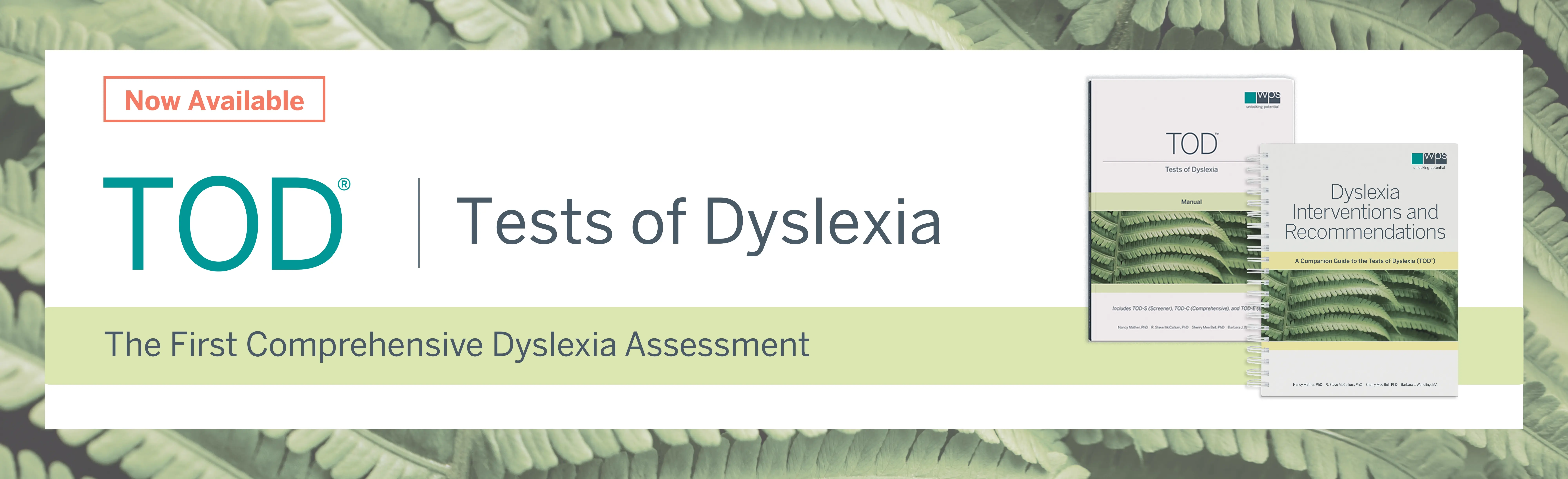
    5. The Tests of Dyslexia (TOD®) is now available


    Buy the Tests of Dyslexia (TOD®) today!


    For students with reading problems, one of the most immediate and important goals for educational professionals and parents is to obtain an accurate diagnosis, which should then inform appropriate interventions. Although dyslexia manifests differently in individuals and exists on a continuum from mild to severe, it can be relatively easy to diagnose when a definitive constellation of symptoms (poor word reading, slow reading rate, poor spelling) and a family history are present. Shaywitz (2003) stated: “The diagnosis of dyslexia is as precise and scientifically informed as almost any diagnosis in medicine” (p. 165). Interestingly, over a century ago, Hinshelwood (1917), a Scottish ophthalmologist, came to a similar conclusion, noting that little difficulty exists in the diagnosis of congenital word-blindness (what we now know of as dyslexia) since the general picture of the “condition” is as clear-cut and distinct as any diagnosis in medicine (p. 88).

    Despite awareness of this reading disorder and its associated characteristics, examiners often encounter additional challenges during assessment and diagnosis. The purpose of this blog is to discuss several factors that can complicate an evaluation—and at times invalidate the conclusions—as well as suggest ways to address or resolve these challenges. Some major challenges include:

    1. use of varied terminology;
    2. sole reliance on phonological awareness as the only linguistic risk factor of dyslexia;
    3. inappropriate use of current assessment models to diagnose dyslexia;
    4. underdiagnosis of twice-exceptional students;
    5. difficulties with early identification;
    6. different orthographies that complicate the evaluation of English Language Learners;
    7. comorbidities that confound accurate diagnosis;
    8. additional factors, such as educational opportunity, socioeconomic status, and the disruption in reading instruction caused by COVID-19; and (i) need for tools with good psychometric properties based on recent dyslexia research (Andresen & Monsrud, 2021).


    Use of Varied Terminology

    Despite the issued memorandum by the United States Department of Education (October 23, 2015) noting that local and state education agencies use the terms dyslexia, dyscalculia, or dysgraphia in describing and addressing unique needs through evaluation, eligibility, and IEP documents, some examiners are reluctant to use the term dyslexia in explaining a student’s reading and spelling difficulties. Siegel and Mazabel (2013) opined: “We do not understand why the term ‘dyslexia’ is often viewed as if it were a four-letter word, not to be uttered in polite company” (p. 187).

    Rather than using the term dyslexia, some examiners prefer to use other terms such as a specific reading disability, a learning disability in basic reading skills or reading fluency/rate, a specific reading disorder (2022 ICD-10-CM Code F81.0), or a specific learning disorder with an impairment in reading (DSM-5 315.00). Any of which are also applicable to a student with dyslexia. Although the term learning disability is a broader category and includes additional disorders, such as oral language, mathematics, or writing, many school districts use this term for a student with dyslexia (e.g., a learning disability in basic reading skills or a learning disability in reading rate). If examiners prefer or if their profession requires an alternate term, it is important to incorporate the phrase “also referred to as dyslexia” to reduce confusion among both educational professionals and parents.


    Sole Reliance on Phonological Awareness as the Major Linguistic Risk Factor of Dyslexia

    Some U.S. state and/or district guidelines identify poor phonological awareness as the only linguistic risk factor for dyslexia. Also, this is true of major organizations that advocate for individuals with dyslexia. For example, the International Dyslexia Association defines dyslexia as “…a specific learning disability that is neurobiological in origin. It is characterized by difficulties with accurate and/or fluent word recognition, poor spelling, and decoding abilities. These difficulties typically result from a deficit in the phonological component of language that is often unexpected in relation to other cognitive abilities and the provision of effective classroom instruction” (Lyon et al., 2003).

    Although weaknesses in phonological awareness can contribute to reading and spelling difficulties, a growing body of literature supports a model of dyslexia that includes multiple linguistic risk factors (Compton, 2020). Three core linguistic risk factors for dyslexia are poor phonological awareness, poor verbal memory, and slow rapid automatized naming (RAN; Rose, 2009).

    Another linguistic risk factor is poor orthographic knowledge (Mather & Jaffe, 2021). Weaknesses in orthographic knowledge are attributed to difficulty recalling word patterns, limited literacy experiences, and reduced exposure to print. To differentiate between the two, an examiner must ascertain that students in a school setting have had sufficient exposure to print. Apel (2011) specified that orthographic knowledge consists of two levels: lexical, which requires access to stored representations of known words; and sublexical, which requires knowledge of permissible letter patterns and sequences. The results from a recent meta-analysis found that in students with dyslexia, an orthographic knowledge deficit was as large as the deficits in both phonological awareness and RAN (Georgiou et al., 2021). Pennington et al. (2012) noted that if examiners adhere to a single deficit profile, such as using only poor phonological awareness as the sole criterion for determining dyslexia, they will miss about one-half of the cases. Thus, a multifactorial model perspective is critical for accuracy in the identification of dyslexia (Compton, 2020).


    Inappropriate Use of Current Assessment Models to Diagnose Dyslexia

    Although the results from intelligence tests can be useful in determining a pattern of strengths and weaknesses, these results can also hinder accurate identification. Nearly a century ago, Orton (1925) noted that it seems probable that “…psychometric tests as ordinarily employed give an entirely erroneous and unfair estimate of the intellectual capacity of these children” (p. 582). Because children with dyslexia often earn low scores on specific subtests that are included in intelligence tests, such as measures of processing speed, working memory, and vocabulary, the overall or composite IQ score can be reduced significantly.

    This situation is particularly problematic for school districts that rely solely on ability–achievement discrepancies for a learning disability determination; the Full-Scale IQ score for a student with dyslexia will almost invariably be lowered because of their poor performance on subtests measuring specific constructs that are affected by dyslexia. Consequently, examiners should conduct a more comprehensive evaluation and not rely solely on the use of a discrepancy criterion for the identification of dyslexia. Examiners should analyze performance on related measures to obtain data that inform a pattern of performance consistent with dyslexia. They should also analyze factors that are less likely to be impacted by dyslexia (e.g., measures of reasoning, linguistic comprehension, quantitative thinking). Hopefully, most evaluators received training in their coursework regarding accurate test interpretation.

    A further problem is that some state and district guidelines assert that a student must have average or above intelligence to have dyslexia. Given that dyslexia is a neurobiological disorder, an individual of any level of intelligence can have dyslexia (Rose, 2009). Furthermore, for older students with dyslexia, their scores on measures of vocabulary and knowledge often decline because of the limited amount of time they have spent reading, the main way we acquire new vocabulary. Three decades ago, Bateman (1992) observed: “The problems in using a formula to identify students who have learning disabilities are many, serious, and too often disregarded” (p. 32).

    In addition, other models conceptualized to screen students for reading problems may miss students with dyslexia. For example, Response to Intervention (RtI) models, currently used by many school systems across the country, require that some criteria reflecting poor performance be obtained for students to be considered at risk and in need of multi-tiered intervention. Because some students with dyslexia have well-developed cognitive abilities, other than those affected by dyslexia, they may be able to compensate for their reading-related difficulties and not score low enough on an RtI screening instrument to meet an at-risk criterion. This is particularly the case for twice-exceptional students who are gifted but also have dyslexia.


    Underdiagnosis of Twice-Exceptional Students

    Twice-exceptional students can have reading scores in the average or better range and still have dyslexia. Because their scores are average, they are not detected by early screenings and do not receive timely interventions. To ensure these students are not overlooked, examiners must consider the student’s level of intelligence, educational history and opportunities, and daily functionality. Some students can compensate for their reading problems, and their reading limitations are unidentified early on. The National Joint Committee on Learning Disabilities advised that “…Although twice-exceptional individuals may appear to be functioning adequately in the classroom, their performance may be far below what they are capable of, given their intellectual ability” (p. 238). In addition to considering a student’s intellectual ability, an examiner should consider high aptitudes in other areas, such as science and mathematics. In her classic book Children Who Cannot Read, Monroe (1932) explained: “The children of superior mental capacity who fail to learn to read are, of course, spectacular examples of specific reading difficulty since they have such obvious abilities in other fields” (p. 23).

    In addition to assessing word reading accuracy, examiners need to survey reading rates on grade-level text. Many twice-exceptional students still have compromised reading rates despite average or even above average reading comprehension. As Shaywitz and Shaywitz (2020) explained: “There is no one single test score that ensures a diagnosis of dyslexia. It is the overall picture that matters. An extremely bright child who has a reading score in the average range but who struggles and cannot learn to read fluently […] has dyslexia” (p. 166).


    Difficulties with Early Dyslexia Identification

    Within the United States, there is no unified system for identifying children in the early years for risk of reading failure. Many districts provide universal screening for reading problems three times a year, but the type of reading specialist support offered in classrooms varies from school to school. Special education teachers are not required to demonstrate proficiency or knowledge of reading instruction, so the quality and intensity of that instruction will vary from school to school. Although a diagnosis of dyslexia becomes more crucial in later years when the student is likely to require accommodations on high-stakes exams, the earlier the identification of this disability, the better. 

    The two most prevalent models for early identification in the United States are an ability–achievement discrepancy and a Response to Intervention (RtI) model. Some districts also use a pattern of strengths and weaknesses for early identification, referred to as a PSW approach. The ability–achievement discrepancy model, traditionally used to diagnose a learning disability, is problematic for the early identification of children with dyslexia, as is an RtI model (McCallum et al., 2013; McClurg et al., 2020). Although many school districts offer early screening in kindergarten and first grade, some students with dyslexia have yet to fall behind and do not demonstrate a discrepancy or fail an early screening. The use of a discrepancy model for the early identification of dyslexia results in what Ozernov‐Palchik and Gaab (2016) described as the “dyslexia paradox.” Dyslexia is typically not identified until second grade when the child has not learned to read as expected; the paradox is that early intervention is most effective in Pre-K–Grade 1 prior to reading failure.

    Consider the case of Rai, a first-grade student. His scores in reading and spelling fall in the low average to average range. He reverses nearly half of the letters of the alphabet. He had speech-language therapy beginning at age 3½ and continuing until age 5. He has been writing his name since he was 3, yet he still writes a backward R. His father is a cardiologist, and his mother is a psychiatrist. His father describes himself as having similar symptoms when he was young, noting that he “flunked” handwriting and that school “was torture” until he got to college. Although Rai’s father was in the gifted program, his teachers told his parents he was an underachiever. Rai’s older brother, age 10, is in the gifted program. Rai is in an enriched environment with lots of books and family time spent reading. He has dyslexia but would not qualify for services in a district that has a strict reliance on a discrepancy formula or an RtI model because he is not yet far enough behind.  Fortunately, even though he was deemed ineligible for special education, his classroom teachers are aware of his difficulties and are supporting him with a small group reading intervention for 45 minutes each day.

    For the accurate early identification of dyslexia, examiners must consider additional factors besides a discrepancy or the results from RtI screening scores. Some young students with dyslexia will not meet an at-risk criterion, either with a discrepancy model or early screening, even though they fall well below the expected performance for gifted or high-ability students. Examiners must also consider whether a student has a history of early speech and language skills/difficulties, a family history of dyslexia, and the level of difficulty mastering early reading and writing skills.

    Many school districts have not embraced the use of the term dyslexia with young children. One reason is that it was originally believed to be a medical diagnosis rather than an educational diagnosis, as with ADHD. Another reason is that dyslexia is considered the most common learning disability. The important point is not what diagnostic label to use, but to establish some consistency in terminology and ensure that students who are struggling with reading for whatever reason, receive the support they need.


    Different Orthographies That Complicate the Evaluation of English Language Learners

    Languages differ regarding their orthography, the writing system. Some languages have deep orthographies with more complex relationships between the speech sounds (phonemes) and the letters that represent these sounds (graphemes) (e.g., English). Other languages have shallow orthographies with higher regularity between the phonemes and graphemes (e.g., Spanish, Finnish).

    In languages with deep orthographies, like English, early challenges for students involve accuracy in the development of decoding and encoding (spelling). In languages with shallow orthographies, like Spanish, the main challenge is associated with the development of speed and automaticity with word recognition. For young children learning to read in English, the best indicators of dyslexia are poor phonological awareness, phonics, and spelling. For young readers learning to read in Spanish, phonological awareness, orthographic coding, and RAN are the best predictive measurements (Clinton et al., 2013).

    At the start of literacy instruction, these three variables appear to be good predictors of reading in most languages: phoneme awareness, letter knowledge, and RAN. However, in the development of reading ability for languages with shallow orthographies, RAN seems to be the strongest predictor. Thus, the components of a comprehensive evaluation may differ depending on the age and first language of the student.


    Comorbidities That Confound Accurate Dyslexia Diagnosis

    High comorbidity (two or more disorders in the same person) exists between dyslexia and other learning disorders. About 40% of children with dyslexia will have another learning disorder (Moll et al., 2020). The most common comorbidities include Attention-Deficit/Hyperactivity Disorder (ADHD), dysgraphia, dyscalculia, and language impairments. With young children, it is often difficult to discern if the problem of developing reading skills can be attributed primarily to ADHD, dyslexia, or both. Consider Ethan, a first-grade student. Ethan is struggling to learn letters and their sounds. He has been taking Ritalin since age 3 for ADHD. During an evaluation for dyslexia, he had difficulty looking at letters. He would glance at a letter when directed but then quickly shift his attention and comment about an object in the office. When attempting a processing-speed task that required him to circle the matching numbers in a row, his eyes would shift to the ceiling. Ethan will have difficulty learning to read, but until his attention challenges resolve, it is impossible to determine whether he also has dyslexia.


    Educational Opportunity, Socioeconomic Status, Trauma, and the Disruption in Reading Instruction Caused by COVID-19

    Students can be behind in reading for many reasons, with only one of the reasons being dyslexia. Vast variability exists in reading skills right from the beginning of school. Some children come to school and are already reading. Their parents have shown them how letters represent sounds and taught them to blend those sounds to pronounce words. Some children come to school never having read in their home prior to beginning instruction. Other children are homeless or have suffered trauma or abuse and are not receptive to instruction. In addition, the recent COVID-19 pandemic kept many children out of school for an entire school year. Results from a recent study indicated that the effects on the growth in oral reading fluency of students in Grades 2 and 3 were profound in the 2020 school year (Domingue et al., 2021). Not surprisingly, students in lower-achieving school districts developed reading skills at a slower rate than those in higher-achieving ones.


    Need for Tools with Good Psychometric Properties Based on Recent Dyslexia Research

    The field needs measures with good psychometric properties that are based on recent dyslexia research (Andresen & Monsrud, 2021) and have the same normative basis (Miciak & Fletcher, 2019). Presently, a comprehensive assessment for dyslexia requires using several different assessments. These assessment batteries have different norm samples, publication dates, and age/grade ranges. They are either standardized tests or rating scales, but not both.

    To help fill this need, the authors of the Tests of Dyslexia (TOD®); Mather, McCallum, Bell, & Wendling, in press) have developed a comprehensive battery to determine whether an examinee exhibits the major characteristics of dyslexia. The goal was to create one battery of co-normed tests measuring the constructs and factors that should be included in a dyslexia evaluation. The TOD was designed to meet both screening and comprehensive evaluation goals.

    The TOD includes measures of the primary areas affected by dyslexia (e.g., word reading, rate, spelling), the major linguistic risk factors (e.g., phonological processing, RAN, working memory), and two cognitive ability measures (vocabulary and reasoning). The TOD also includes co-normed self, teacher, and parent rating scales to help determine current functioning levels and relevant family history. It also contains a guide for instructional recommendations that may be used or copied and pasted into educational supports. The main purpose of the TOD is to provide one integrated system that incorporates test results, rating scale results, and educational interventions.


    What happens after Dyslexia Testing?

    When a student has been diagnosed with dyslexia, early intervention is critical. Both parents and teachers should ensure reading interventions are intensive, systematic, and provide periodic evaluations of progress; that reading interventions are provided by a trained reading specialist, not a classroom aide or peer tutor; and recognize that interventions will change based on the child’s reading development: specific instruction in phonemic awareness and phonics, structural analysis, spelling, or methods to increase reading fluency.

    Unfortunately, in the United States, many teachers still lack training in structured reading methods designed to help students with dyslexia. Or in some instances, they have the training but do not have enough time. Efforts are underway to mitigate this issue and prepare more teachers. For example, the International Dyslexia Accreditation (IDA) program approves universities where the course work aligns with the IDA’s Knowledge and Practice Standards for Teachers of Reading. The International Multisensory Structured Language Education Council (IMSLEC) provides a pathway for independent teacher accreditation and preparation to teach students with dyslexia.

    Cruickshank (1977) stated: “Diagnosis must take second place to instruction, and must be made a tool of instruction, not an end in itself” (p. 194). Any evaluation for a student with reading difficulties should address the reasons for those difficulties and provide appropriate interventions.


    Conclusion 

    As with any disorder, when testing for dyslexia an accurate, early diagnosis is beneficial. Not only for intervention but also for the preservation of self-esteem. Ozernov‐Palchik and Gaab (2016) noted that “This ‘dyslexia paradox’ is detrimental to the well-being of children and their families who experience the psychosocial implications of dyslexia for years prior to diagnosis” (p. 157). In his book My Dyslexia, Schultz (2011) explained: “[The] ignorance of my dyslexia only intensified my sense of isolation and hopelessness. Ignorance is perhaps the most painful aspect of a learning disability” (p. 64). Over eight decades earlier, Dolch (1937) pointed out that “Failure to learn to read as others do is a major catastrophe in a child’s life” (p. 1). A major purpose of the development of the TOD was to support early diagnosis and intervention and thus reduce the emotional toll, impact on self-esteem, and social consequences experienced by individuals with this reading disorder. We need to ensure that children with dyslexia are identified at an early age, understand why reading is so hard for them, provide them with appropriate intensive interventions, and treat them with compassion and understanding throughout their school years.


    Further Reading on Dyslexia 


    Dyslexia Webinars


    Author contact: n.mather@att.net


    Acknowledgments 

    I would like to thank my co-authors on the TOD (R. Steve McCallum, Sherry M. Bell, and Barbara J. Wendling) for their feedback and suggestions on the initial draft of this blog, as well as Laura Wallof, Stephanie Roberts, Kristen Porter, and Bonnie Mills from WPS, Julia Kender from PATOSS, and Irene Gonzalez.


    Related:


    Research and Resources:


    Andresen, A., & Monsrud, M. B. (2021). Assessment of dyslexia—Why, when, and with what? Scandinavian Journal of Educational Research. https://doi.org/10.1080/00313831.2021.1958373

    Apel, K. (2011). What is orthographic knowledge? Language, Speech, and Hearing Services in Schools, 42(4), 592–603. https://doi.org/10.1044/0161-1461(2011/10-0085)

    Bateman, B. (1992). Learning disabilities: The changing landscape. Journal of Learning Disabilities, 25, 29–36.

    Clinton, A., Christo, C., & Shriberg, D. (2013). Learning to read in Spanish: Contributions of phonological awareness, orthographic coding, and rapid naming, International Journal of School & Educational Psychology, 1(1), 36-46. http://dx.doi.org/10.1080/21683603.2013.780195

    Compton, D. L. (2020). Focusing our view of dyslexia through a multifactorial lens: A commentary. Learning Disability Quarterly, 44(3), 1–6. https://doi.org/10.1177/0731948720939009

    Cruickshank, W. M. (1977). Least-restrictive placement: Administrative wishful thinking. Journal of Learning Disabilities, 10, 193-194.

    Dolch, E. W. (1939). A manual for remedial reading. Garrard Press.

    Domingue, B. W., Hough, H. J., Lang, D., & Yeatman, J. (March 2021). Changing patterns in the growth in oral reading fluency during the COVID-19 pandemic. Policy Analysis for California Education. Working paper.

    Georgiou, G. K., Martinez, D., Vieira, A. P. A., & Guo, K. (2021). Is orthographic knowledge a strength or a weakness in individuals with dyslexia? Evidence from a meta-analysis. Annals of Dyslexia. Published online: March 12. https://doi.org/10.1007/s11881-021-00220-6

    Hinshelwood, J. (1917). Congenital word-blindness. H. K. Lewis.

    Lyon, G. R., Shaywitz, S. E., & Shaywitz, B. A. (2003). A definition of dyslexia. Annals of Dyslexia, 53, 1–14. https://doi.org/10.1007/s11881-003-0001-9

    Mather, N., & Jaffe, L. (2021, September). Orthographic knowledge is essential for reading and spelling. Reading League Journal, 15–25.

    Mather, N., McCallum, R. S., Bell, S. M., & Wendling, B. J. (in press). Tests of Dyslexia. Western Psychological Services.

    McCallum, R. S., Bell, S. M., Coles, J., Miller, K. C., Hopkins, M., & Hilton-Prillhart, A. (2013). A model for screening twice-exceptional students (gifted with learning disabilities) within a response to intervention (RTI) Model. Gifted Child Quarterly, 57(4), 209–222. https://doi.org/10.1177/0016986213500070

    McClurg, V. M., Hassett, N. R., Bell, S. M., McCallum, R. S., & Coladata, B. M. (2020, February). A comparison of two models for dyslexia screening [Paper presentation]. National Association of School Psychologists Annual Convention, Baltimore, MD, United States.

    Miciak, J., & Fletcher, J. (2019). The identification of reading disabilities. In D. Kilpatrick, R. M. Joshi, & R. K. Wagner (Eds), Reading development and difficulties: Bridging the gap between research and practice (pp. 159–177)Springer.

    Moll, K., Snowling, M. J., & Hulme, C. (2020). Introduction to the special issue “comorbidities between reading disorders and other developmental disorders.” Scientific Studies of Reading, 24(1), 1–6. https://doi.org/10.1080/10888438.2019.1702045

    Monroe, M. (1932). Children who cannot read. University of Chicago Press.

    National Joint Committee on Learning Disabilities (2011, March). Learning disabilities: Implications for policy regarding research and practice: A report by the National Joint Committee on Learning Disabilities. Learning Disability Quarterly, 34, 237–241.

    Orton, S. T. (1925). “Word-blindness” in school children. Archives of Neurology and Psychiatry, 14, 581- 615. https://doi.org/10.1001/archneurpsyc.1925.02200170002001

    Ozernov‐Palchik, O., & Gaab, N. (2016). Tackling the ‘dyslexia paradox’: Reading brain and behavior for early markers of developmental dyslexia. WIREs Cognitive Science, 7, 156–176. https://doi.org/10.1002/wcs.1383

    Pennington, B. F., Santerre-Lemmon, L., Rosenberg, J., MacDonald, B., Boada, R., Friend, A., Leopold, D. R., Samuelsson, S., Byrne, B., Willcutt, E. G., & Olson, R. K. (2012). Individual prediction of dyslexia by single versus multiple deficit models. Journal of Abnormal Psychology, 121(1), 212–224. http://doi.org/10.1037/a0025823

    Rose, J. (June 2009). Identifying and teaching children and young people with dyslexia and literacy difficulties. An independent report from Sir Jim Rose to the Secretary of State for Children, Schools, and Families. DCFS Publications. http://www.education.gov.uk/publications/

    Schultz, P. (2011). My dyslexia. W. W. Norton & Company.

    Shaywitz, S. (2003). Overcoming dyslexia: A new and complete science-based program for overcoming reading problems at any level. Alfred A. Knopf.

    Shaywitz, S., & Shaywitz, J. (2020). Overcoming dyslexia (2nd ed.). Alfred A. Knopf.

    Siegel, L. S., & Mazabel, S. (2013). Basic cognitive processes and reading disabilities. In H. L. Swanson, K. R. Harris, & S. Graham (Eds.), Handbook of learning disabilities (2nd ed.) (pp. 186–213). Guilford Press.

    United States Department of Education, Office of Special Education and Rehabilitative Services. (October 23, 2015). Dear colleague: Guidance on dyslexia.


  •  

    Music class rattled Johnny. The sounds disorganized his thoughts. During lunch in the cafeteria, the noises were downright painful. In the classroom, he frequently fell out of his seat. Even in PE class, which Johnny enjoyed, he needed to separate himself from his classmates and press his body against the wall to feel better. 

    In response, his teachers sometimes limited his recess time or sent him to meet with school leaders. They didn’t realize Johnny had sensory processing issues. When they learned what he was dealing with, they made some simple alterations that changed Johnny’s life for the better. Johnny’s experience convinced his teachers that similar changes to the larger classroom environment could benefit many more students. 

    “It’s hard,” said Johnny’s mother, Pamela. “You can see when someone has a broken arm. When it’s on the inside, you can’t tell what’s happening.” 


    What’s the definition of “challenging behavior”?

    There’s no single, comprehensive definition of challenging behavior. Broadly speaking, the term refers to behaviors that have the potential to injure a person or negatively impact their safety or well-being. Hitting, kicking, and biting are typical examples, but challenging behaviors can also look like withdrawal, bathroom accidents, or refusal to eat or speak. What’s considered challenging in one setting might not be seen as challenging in another (Head Start/ECLKC).


    First signs of sensory processing issues 

    When Johnny was six months old, Pamela used to rest him on her hip while holding him—until he bit her shoulder. When the biting became a regular response, she put him down when he bit.  

    As Johnny grew up, Pamela noticed that getting ready in the morning was especially hard for him. He often became very emotional—but Pamela thought that was probably true for most kids. 

    Johnny’s preschool teacher also noticed that Johnny’s behavior was different. Sometimes he lay down in a corner of the classroom and went to sleep or got upset when he wasn’t allowed to finish what he was working on. Occasionally, Johnny bit someone when they weren’t even mad at one another. 

    Pamela wondered what this behavior at school meant. His teacher said Johnny seemed overwhelmed sometimes. She gave Pamela contact information for the ADHD clinic in town. 


    Sensory and behavior issues continue in kindergarten 

    In kindergarten, Johnny became more physically aggressive with other kids, getting in their space and even occasionally hitting them. He sometimes pushed other kids off the swing because he wanted a turn. 

    Pamela wasn’t seeing such challenging behaviors at home. Sure, Johnny was sensitive to some loud sounds, but at home, she kept Johnny and his younger brother on a good schedule, getting them up in the morning and having lunch at the same time each day. They read a story and sang a song before bed. Their routine was firm but flexible. 

    She and Johnny visited the local ADHD clinic, where she was told Johnny was demonstrating behavior problems that stemmed from a lack of discipline at home. Pamela and her husband, Bob followed the clinician’s recommendations. They put up behavior charts at home and instituted rewards and timeouts—but these strategies didn’t seem to change the behavioral concerns. 


    Challenging behaviors in first grade 

    Johnny’s first-grade teacher, Ms. L, noticed that Johnny kept to himself and grew defiant when he didn’t want to complete a task. Johnny typically removed himself from the class when he was upset. Ms. L said he had trouble focusing and had crying meltdowns. Her response “sometimes involved removing the rest of the class to ensure everyone was safe.” 

    Ms. L let him take breaks and allowed him to leave the class to help him refocus. She took recess away when he threw or broke things, tore up papers, or messed up others’ projects. Instead of recess, Johnny was asked to write apology notes to his classmates. In the hallway, Ms. L sometimes held his hand so he was with the group and not lagging behind everyone. 

    Johnny was frustrated. His mom was, too. 

    “I was lost and not really sure where to turn next,” Pamela said. 


    Clues from an old friend

    Every summer, Pamela and Bob took their sons to a summer camp in the California redwoods where Pamela had visited since she was a kid. Johnny was fearless at the camp, climbing trees and exploring nature. There was also a large room where everyone gathered and sang. Johnny did not like the loud singing in the room, but Pamela always encouraged him to stay and participate. 

    Pamela described Johnny’s struggles to a friend at the camp who happened to be an occupational therapy practitioner (OTP). The OTP observed Johnny, and after asking Pamela a series of questions, suggested that Johnny might have a sensory processing disorder. 

    “I had never even heard of that before,” Pamela said. After they returned home, Pamela found an online sensory processing checklist. 

    “I thought the questions were describing my child to a T,” Pamela said. “And I couldn’t believe it.” 

    A local OTP visited the family at home and recommended that Johnny participate in a study conducted by Diana A. Henry, MS, OTR/L, an occupational therapist with 40+ years’ experience. She is also the author of the Sensory Processing Measure (SPM™) and SPM Quick Tips (SPM QT). Pamela sensed the study could be a great opportunity for Johnny. 


    Observation leads to insights

    When Diana Henry walked into Johnny’s school for the first time, she met one of Johnny’s former teachers, who said Johnny had behavior problems, not sensory issues. 

    In addition to using the SPM and other assessment tools, Diana observed Johnny sitting on a small cushion in his first-grade classroom. At that point, no one had analyzed his posture, his movement patterns, or his ability to interpret sensory information. 

    Johnny was legitimately falling out of his classroom chair. He wasn’t fooling around, as his teachers thought. He couldn’t keep his head up for very long and often rested his head in his hand, which made writing difficult because he couldn’t hold down the paper. As a result, he grew tired quickly and became distracted. 

    Johnny was more attentive and performed better with additional movement, such as in PE class. But just like in the loud cafeteria, Johnny still had to press his body against the wall for relief and the deep-touch pressure he craved. In music class, Johnny had to get away from the loud sounds to calm down. He lay down on the carpet to get some relief. Without understanding his sensitivity to sounds, the music teacher told Johnny to rejoin the class or go to the principal’s office. 

    “Unless you are looking for these things, you just think he has behavior challenges,” Diana said. 

    In addition to school-based occupational therapy (OT), Johnny was able to attend clinic-based sensory integration intervention. At one of the first sessions following evaluation, clinic-based OTP Kathy Barrett brought out some extra-heavy blankets and large foam rollers to provide deep-touch pressure. 

    “It feels sooooo goooood,” Johnny said, refusing to come out from under the weight. 

    “Is it too heavy?” Kathy asked. 

    “It’s perfect,” Johnny said. 


    SPM Quick Tips across environments

    Johnny’s parents completed the SPM home form, and school staff completed the SPM classroom, PE, music, recess, and cafeteria forms. Afterward, the adults in Johnny’s life selected the SPM QT intervention strategies that were most relevant to Johnny’s needs. Diana Henry also provided sensory integration and Integrated Listening System interventions at the clinic. Each individual tracked the frequency of use on their SPM QT record forms. Over time, this provided the team with information about which SPM QT technique had been used, how often, and to what effect. 

    When working on homework, Johnny wore soft music headphones to help with his sound issues. He sat on a 55-centimeter stability ball or “ball chair,” which increased his attention and alertness through gentle bouncing. In the mornings and evenings, Pamela piled on layers of pillows and blankets they called “toppings” in their “Pizza Game.” She also gave him joint compressions and bear hugs in which she squeezed him as hard as he needed. It was all designed to provide deep-touch pressure sensory input to help him feel calm, resulting in increased focus. 

    “That’s what we’d do right before he went to school so that he could be a functioning child in the classroom,” Pamela said. “And we’d do those things at bedtime, too, to help him sleep.” 

    At school, Diana recommended that Johnny carry heavy books from one classroom to another. Doing this SPM QT “heavy job” engaged his muscles. The activity also allowed Johnny to feel he was being helpful. He also did some wall push-ups or bounced on an exercise ball. He wore his coat between classes to protect him from unexpected bumps by other students, which could lead to fight-or-flight responses. 

    These SPM QT interventions gave Johnny’s proprioceptive, vestibular, and tactile systems the additional sensory input they needed. Ultimately, the SPM QT techniques were used across environments at home, school, clinic, and summer camp. 

    “Diana taught me so much, and I’ve taken it and used it,” Pamela said. “Johnny has always been a free spirit. He’s always been happy and loving. That is something that has never changed throughout his 13 years, which I am happy about.” 


    Proactive sensory strategies for preschool 

    Sensory processing issues can make it harder for young children to cope with visual, auditory, and tactile experiences in school. Every child is unique. Here are a few strategies that may calm children with sensory sensitivities: 

    1. Carefully consider your lighting choices. Natural, dim, and filtered lighting may be easier for some children to take.
    2. Provide soothing spaces that allow children to retreat from boisterous group activities. Plants and fish tanks can add a peaceful feeling to such spaces.
    3. Allow children to choose where to sit. Some children don’t want to be touched or jostled, so giving them physical space may prevent conflicts. Others may want to distance themselves from noisy zones or machines.
    4. Incorporate movement and textures with classroom learning when possible.
    5. Keep wipes and washcloths handy for children who dislike feeling sticky or dirty.  

    Learn more in this infographic: How to Create a Sensory-Friendly Classroom


    Johnny makes strides

    Providing the sensory input Johnny needed enabled him to sit in his seat, focus, and participate in classroom activities. He wasn’t as physical with the other students and no longer felt the urge to run into or jump on people. 

    Ms. L, Johnny’s first grade teacher observed that consistency in providing the SPM QT interventions was key. It was also more effective, she said, to be proactive in applying the strategies, so they could prevent challenging behaviors.  

    Before sensory integration therapy, Johnny often ran up to one of his classmates—intending to put his arm around them—but collided with them instead because he did not have a sense of how hard he was pushing. After therapy, that kind of contact didn’t happen as often.  

    After six years of school-based OT followed by twice-weekly OT interventions, Johnny was much better at self-regulation. He rarely became physical and didn’t have emotional “meltdowns.” 

    “Things he did when he was one year old that make sense now,” Pamela said. “The only way he could get the stimulation he needed was through his jaw, so he’d have to bite something.” 


    Schoolwide changes

    Johnny’s success eventually benefitted students throughout the school.  

    “I learned which SPM QT interventions worked for Johnny,” Ms. L recalled. “Because they were easy to implement, some strategies could be used with other students as well. I learned that Johnny had a different way to process his feelings, and the strategies I learned were beneficial to so many students.” 

    After seeing Johnny’s success of the stability ball, for example, Ms. L wrote a grant through donorschoose.org. Family, friends, and some community members funded the project, and she received a class set of stability balls. Since then, she has added to the flexible seating movement with wobble stools, crate seats, scoop chairs, standing areas, and wiggle seat cushions. 

    Students, parents, and teachers also adopted stability balls as an alternative to regular chairs. Three years later, Ms. L wrote another grant and provided three stability balls to each classroom to expand student choice of seating. 

    Ms. L said, “Giving children options for seating and increasing the ability to move throughout the day has provided much-needed movement while learning.” 

    For Pamela, seeing the change was heartwarming. “Teachers are hearing what their students need, realizing that they can make these small changes. It’s not just going to benefit students diagnosed with ADHD and Sensory Processing Disorder. It’s going to benefit many of them,” she said. 


    A team approach helps 

    School professionals often observe different aspects of a child's behavior. Gym teachers, counselors, classroom teachers, and diagnosticians should share perspectives before a diagnosis is made. 


    Breakthrough results continue

    At the start of each new school year, Pamela meets with Johnny’s teachers and any other staff who will see him throughout the day. 

    She explains Johnny’s sensory needs and related behaviors, and she shares SPM QT strategies they can use with him. Most teachers are grateful for her tips. Some come up with their own techniques to help Johnny. 

    “It’s just like all the information and tools I can give to that person to help them because, like me, I didn’t know what this was,” Pamela said. “Most people saw him as a behavioral problem. It’s like, OK, there’s behavior involved, but it’s coming from somewhere. There’s a foundation. These behaviors are a symptom of what’s happening.” 

    The benefits of Johnny’s sensory integration journey also extend to the camp setting. After using and sharing SPM QT with camp counselors, Johnny now climbs trees safely. When indoors, he rolls around on the floor whenever he needs. And he can remove himself from uncomfortable situations such as loud rooms when he needs to do so.  

    Before therapy, Pamela often urged Johnny not to climb on this or that. She often warned him to be careful and to be still.  

    “All that time I had no idea I was doing the exact opposite of what he needed. He didn’t know it and I didn’t know it,” she said. “He, I think, has had such a better experience at camp because I’ve awoken to his body’s needs. So that’s something that I absolutely love. I’m so grateful that I know what’s going on with him now and so does he. Now I have different boundaries at camp. It’s like, I know now what you need at camp, and from now on you’re going to get it.” 


    Cultural sensitivity needed

    Considerations when working with students should always include home and family culture. Culture shapes many aspects of our lives, including how we perceive and respond to sensory information. As you assess sensory processing and provide sensory therapies, it’s important to practice cultural awareness with students and their families. For example, children raised in quiet homes may be bothered by excessive background noise as they learn. Similarly, children who have experienced early childhood trauma may over- or under-react to sensory information (Joseph et al., 2021). Understanding a child’s background can help you determine which interventions could make a difference. 


    The actual names of Pamela, Bob, and Johnny have been changed to protect Johnny’s identity. This SPM-2 case study provides information based on the SPM and SPM Quick Tips. The SPM-™2 and the SPM-2 Quick Tips had not been published when Johnny was receiving intervention following assessment. WPS published the SPM-2 and SPM-2 Quick Tips in 2021. 

    View a pdf of this story that includes ball chair instructions and three forms related to Johnny’s assessment and intervention. 


    Related to this SPM-2 Case Study:


    Research and Resources:


    Head Start Early Childhood Learning & Knowledge Center. (2023, February 8). Dual language learners with challenging behaviors. https://eclkc.ohs.acf.hhs.gov/culture-language/article/dual-language-learners-challenging-behaviors 

    Joseph, R. Y., Casteleijn, D., van der Linde, J., & Franzsen, D. (2021). Sensory modulation dysfunction in child victims of trauma: A scoping review. Journal of Child & Adolescent Trauma, 14(4), 455–470. https://doi.org/10.1007/s40653-020-00333-x 


  •  

    by Adriana Lavi, PhD, and Kristin Ferrell, PhD


    The Clinical Assessment of Pragmatics (CAPs™) is a norm-referenced video-based pragmatic language battery of tests for children and young adults ages 7 through 18 years. The CAPs, which offers an Online Kit that was released by the publisher WPS in May, is composed of six subtests. Each of the CAPs subtests is based on a well-defined pragmatic language construct. The CAPs is the first assessment tool of its kind to evaluate pragmatic judgment and performance using a series of video-based social scenarios. It is a reliable test that yields valid results on pragmatic judgment and the use of social language and nonverbal cues, such as facial expressions, prosody, and gestures. The CAPs test yields four types of scores: raw scores, scaled scores, percentile ranks, and composite and index scores to assist examiners in obtaining a comprehensive, pragmatic language profile.


    One of the most notable benefits of the CAPs is its unique test design, which consists of videos that are true-to-life interactions. The videos are presented in relevant, life-like content, and the actors in the videos are from a wide variety of ethnic and cultural backgrounds. Verbal dialogue in the videos is easy to attend to and understand. It is presented at a rate that is controlled for speed without being unnaturally slow. The vocabulary used in the videos is appropriate to the testing age range (7 to 18 years), and the real-life situations are those which might be expected to occur in environments with which the participants could be expected to be familiar.


    CAPs evaluates both examinees’ level of pragmatic judgment (meaning their ability to comprehend social situations), and their ability to express themselves in an appropriate manner within various social situations. The pragmatic performance aspect of this test is a crucial feature, which is unique because it allows the examiner an opportunity to elicit the participants’ both verbal and non-verbal responses. Beginning with ‘superficial’ layers of instrumental social situations, this test delves into every level of pragmatics, and assesses ‘intricate’ high-level skills, such as the examinees’ ability to express sadness, gratitude, frustration, support, and surprise, as well as their ability to use nonverbal language such as facial expressions and prosody.


    A key area that may have been overlooked by traditional testing is the examinees’ use of higher-level pragmatic language, specifically the ability to use affective communication and paralinguistic (nonverbal) cues. For example, the Paralinguistic Decoding subtest is the most unique standardized measure that assesses the ability to use various non-verbal cues, such as facial expressions, tone of voice, inflections in prosody, gestures, and overall body language to express a variety of communicative intents. The CAPs is an effective means by which speech-language pathologists, as well as other related practitioners, can obtain a greater and comprehensive understanding of their examinees’ pragmatic language needs, such as awareness of basic social routines, the ability to read a variety of dynamic contextual cues and non-verbal language, the ability to use social routine language, and the ability to express higher level language, such as emotions and use nonverbal cues.


    The CAPs uses a series of video-based social scenarios. Examinees are presented with a social situation in a video-based format and are asked two types of questions. On the pragmatic judgment (receptive pragmatic) subtests, the examinees are asked to judge the appropriateness of a variety of social situations by answering the following: “Did anything go wrong in this video?” and “What went wrong?” On the pragmatic performance (expressive pragmatic) subtests, the examinees are presented with a social situation and are asked: “Show me, what would you say and how?” The CAPs test can be administered with relative ease. The video content can be accessed via a CAPs memory stick or online. Scoring has been simplified by listing the scoring criteria and rubrics in the Examiner Record forms. A listing of the most common correct and incorrect responses is provided as well.


    Researchers and practitioners have long argued for the need to develop pragmatic language assessments that target the unique social language characteristics of students with autism and pragmatic language impairment, such as higher level language expression, inferential thinking, and understanding the minds of others. Current means of assessing students who fall into this complex ‘grey area’ of higher-level pragmatic language ability have long relied on careful dynamic and informal observations and documentation. This comes with a major cost in time and labor to identify evidence to indicate that these students qualify for special services through public schools. However, even with careful dynamic observations and assessment, it is difficult to elicit skills within the suspected areas of weakness or those that the students’ caregivers and educators express concerns about. School-based observations that target social interaction and socialization are most often impossible or insufficient.


    For example, it may be impossible to observe a student’s ability to express sorrow, affection, consolation, support, gratitude, etc., from school-based observations during students’ recess or lunchtime. The CAPs presents a viable testing method: a comprehensive test of pragmatic language ability that elicits responses through a set of video-based role plays of real-life situations. This method is not only able to evaluate students’ instrumental and “surface” pragmatic language skills, but it can be sensitive to the higher level pragmatic skills, such as understanding of and expression of facial expressions, body language or ability to appropriately express affective language. This test replaces the use of one-dimensional and static pictured stimuli of social situations with real-life scenarios presented in a video format. The nature of social interactions is dynamic, continuous, and fast. Pictures of social interactions are static and may not effectively elicit authentic responses, such as understanding of sarcasm, arrogance, etc. The use of real-life social situations is the closest method to elicit students’ ability to read dynamic contextual cues and nonverbal language.


    In addition to assessing pragmatic judgment and pragmatic performance skills, this test differentiates social language as either instrumental or affective (non-instrumental) communication. In instrumental communication, the primary goal is to relay information effectively to the interlocutor, and where communication is used as a means to an end (i.e., communication is focused on benefitting the self). Focus is heavily emphasized on what is being said as opposed to affective or emotional functions. Because difficulty understanding others’ emotions and perspectives is a highlighted characteristic in individuals with autism and social communication disorder, instrumental communication is often used. This is critical in the assessment of such individuals. Affective communication involves higher-level communication skills, such as expressing emotions (i.e., joy or sorrow) to another person. It is a key component of non-verbal communication and also requires higher-level thought processing. ‘This metacognitive ability requires more than simply engaging in comprehension and production of pragmatically acceptable communication” (Carrow-Woolfolk, 1999).


    Table 1

    Description of CAPs Subtests


      Pragmatic Judgement vs Pragmatic Performance
    Instrumental Intent

    Instrumental Performance Appraisal

    (Awareness of Basic Social Routines)


    This subtest measures awareness of basic social routines and the ability to judge their appropriateness. This includes the ability to judge appropriateness of introductions, politeness, making requests, requesting help, answering phone calls, asking for permission, identifying rude tone used for requests, identifying polite language, understanding when interruptions are appropriate, and understanding rules of conversational turn-taking.


    Instrumental Performance

    (Using Social Routine Language)


    This construct measures language skills that are necessary to satisfy an individual’s basic needs and express communicative intent that is instrumental in nature. This includes the ability to use social routine language, such as expressing greetings, introductions, politeness, making requests, responding to gratitude, requesting help, requesting information (e.g., directions), and asking for permission.

    Affective Intent

    Social Context Appraisal

    (Reading Context Cues)


    This subtest measures awareness of social context cues, the ability to understand the intent of others, and the ability to infer what others are thinking (perspective taking). This also includes detecting non-verbal cues, understanding of indirectly implied requests and/or statements (e.g., idioms, expressions), making appropriate inferences (e.g., sarcasm) and making judgements about social context when situational cues change.


    Affective Expression

    (Expressing Emotions)


    This subtest measures the ability to appropriately express higher order pragmatic language that is emotive in nature, such as regret, sorrow, peer support, praise, empathy, gratitude, encouragement, etc.

    Paralinguistic Cohesion

    Paralinguistic Decoding

    (Reading Nonverbal Cues)


    This construct measures the ability to detect a speaker’s intent by recognizing meanings of various non-verbal cues, such as facial expressions, tone of voice, inflections in prosody, gestures, and overall body language.


    Paralinguistic Signals

    (Using Nonverbal Cues)


    This subtest measures the ability to use various non-verbal cues, such as facial expressions, tone of voice, inflections in prosody, gestures, and overall body language to express a variety of communicative intents.


    The normative data for the CAPs test are based on the test performance of 914 examinees across 9 age groups (7 years, 0 months to 18 years, 11 months) in 15 states. The data were collected by 23 state licensed speech-language pathologists. To ensure representation of the national population, the CAPs test standardization sample was selected to match the US Census data reported in the ProQuest Statistical Abstract of the United States, 2017. The sample was stratified within each age group by the following criteria: gender, race or ethnic group and geographic region. A series of reliability and validity studies were conducted to include: internal consistency (ranging from .79 to .94), SEM analyses, interrater (ranging from .90 to .94), test-retest reliability (ranging from .80 to .95), and content, construct and criterion validity, as well as inter-correlations of the CAPs subtests. Clinical validity studies revealed sensitivity ranging from .90 to 1.0 and specificity ranging from .85 to .97. When comparatively analyzing scores of clinical groups (high functioning autism, social communication disorder) and typically developing examinees, comparisons using Mann- Whitney U test showed that there was a significant difference among all three study groups (p<0.001).


    Caution should be taken when considering one’s performance on any standardized assessment. Examiners must use a variety of different assessments and strategies to obtain relevant functional and developmental information about an individual, including information provided by caregivers and teachers and information obtained from observations across a variety of contexts. Assessors must not rely on a single measure or assessment used as the sole criterion for making clinical decisions. Even though the CAPs test was designed carefully with extensive research and statistical analysis, results obtained on the CAPs test should be supplemented with a variety of other standardized assessment and informal measures such as systematic observations, contextual analyses, etc.


    Adriana Lavi, PhD, is the author of the CAPs, and Kristin Ferrell, PhD, is a consultant working with WPS. The CAPs Online Kit was released in May 2020.


    Related:


    Research and Resources:


    Carrow-Woolfolk E. (1999). Comprehensive Assessment of Spoken Language. American Guidance Service.

    Chandler, D., and Munday, R. (2011). A Dictionary of Media and Communication. Oxford University Press.

    Lavi, A. (2016). Clinical Assessment of Pragmatics (CAPs): A Validation Study of a Video-Based Test of Pragmatic Language in Adolescent Students. Autism Open Access 6:172.

    Lavi, A. (2018). Clinical Assessment of Pragmatics. Los Angeles, California, Western Psychological Services.

    Ryder, N., Leinonen, E., and Schulz, J. (2008). Cognitive approach to assessing pragmatic language comprehension in children with specific language impairment. International Journal of Language & Communication Disorders 43: 427-447.

    Young, E., Diehl, J., Morris, D., Hyman, S., & Bennetto, L. (2005). The use of two language tests to identify pragmatic language problems in children with autism spectrum disorders. Language, Speech, and Hearing Services in Schools 36: 62–72

    Volden, J. and Phillips, L. (2010). Measuring pragmatic language in speakers with autism spectrum disorders: Comparing the children's communication checklist--2 and the test of pragmatic language. American Journal of Speech-Language Pathology 19(3): 204-12.


  • A Message of Solidarity


    At WPS we stand together with our employees, practitioners, school professionals and communities in rejecting racism and discrimination.

    Let me be clear: Black Lives Matter.

    As an organization, WPS stands for inclusivity, diversity, and equality. Our mission is to unlock potential for everyone.

    But this moment has brought new meaning to our mission. It has brought recognition, for me and WPS, that unlocking potential requires a higher level of commitment to ending systemic racial injustice.

    A desire for change must translate into action and the following are examples of how we are meeting this moment:

    • Committing to unconscious bias training within our organization
    • Committing to more diverse hiring practices and embracing innovative programs that can advance candidates from backgrounds generally underrepresented in our field
    • Engaging our teams on how to create a more inclusive organization
    • Developing forums for employees to gather, share, and learn from each other to enhance awareness of inequality and focus on solutions
    • Contribute financially by partnering with non-profits dedicated to creating educational and economic opportunities for the Black community

    Helping others is why WPS exists. As we examine and educate ourselves, we invite your feedback on how we can further lean into this moment and do our part to make a difference.

    Learning and growing alongside you.

    With Gratitude,

    Jeff Manson

    President@wpspublish.com


    Jeff Manson is President and CEO of WPS and a third-generation test publisher.

  •  

    The COVID-19 pandemic has changed both how we work and the language we use. For many practitioners, telepractice has introduced new concepts to the traditional methods of evaluation. In an effort to promote consistency, here’s a list of industry terms and what they mean to professionals in relation to WPS assessments.

    Clinical Interview — One-on-one discussion with the client where the clinician asks specific questions and/or open-ended questions in order to assess the client’s behaviors, feelings, and thoughts. The structure and formality of the interview may differ, and not all questions may be the same for each client. There is some flexibility in the follow-up questions the clinician asks and in the language used during the interview based on the client’s responses.

    Device — Electronic physical hardware equipment that serves as the screen used to display and/or access digital testing materials.

    Digital Record Form — An electronic version of the Record Form (or Test Protocol) that has all or some combination of the following functionality: administer test items, record examinee’s responses, calculate scores, and create test reports using the WPS Online Evaluation System (OES). Depending on the design of the test in OES, this might provide all the information needed to administer test items or might be used in conjunction with a Digital Administration Guide (see Test Easel). This may also be used to record responses or used in conjunction with a PDF Response Sheet.

    In-Person Administration — A test administration that is conducted face-to-face, where the examiner and the examinee are in the same room.

    Observational Assessment — An assessment type where the examiner measures the examinee’s behaviors, thoughts, feelings, and/or skills by observing the examinee in specific situations and/or environments. Observations may be formal or informal across different settings (e.g., play at home vs. school; with parents vs. friends, etc.)

    Onsite Facilitator — For remote administrations, the onsite facilitator is the person who assists with conducting the assessment at the examinee’s location. They are responsible for bringing and setting up any equipment needed during the administration, and coordinating sending any testing forms used by the examinee to the examiner after the testing. This is usually a paraprofessional who is trained in the assessment administration procedures.

    PDF Response Sheet — An electronic document available for download for specific OES products that can be printed and used during an assessment administration instead of using the Digital Record Form. For rating scales, the examinee may fill out their responses to the test items listed on the PDF Response Sheet and the examiner will enter their responses into the OES after the assessment. For performance tests, the examiner may use the PDF Response Sheet to write down the examinee’s responses and then enter item scores for the OES online scoring after the assessment. The amount of test content included can vary (e.g., items with response options listed for each; no item content but includes response options; no item content and blanks for write-in responses).

    Performance Test — A direct assessment conducted by the examiner asking specific questions or having specific tasks for the examinee to complete in order to assess the examinee’s skill in a specific area.

    Rating Scale — An assessment type that lists questions and/or statements about the examinee’s behaviors, thoughts, and feelings with ratings of how the respondent endorses each question/statement. The examinee may respond directly to these questions/statements (e.g., self-report) or another person may report on their experience with the examinee (e.g., parent or teacher report). Rating endorsements may indicate how frequently a behavior occurs, how much the respondent agrees with the statement, and/or on the prevalence of specific behaviors over a range of time frames (e.g., the past 6 weeks vs. the span of several years/lifetime).

    Remote Administration — A test administration that is conducted where the examiner is in a different geographical location than the examinee. This may be done using a telephone, audio/video teleconferencing platform, or other technology that virtually connects the examiner and examinee and ideally is designed specifically for telehealth practice. This can also be referred to as Tele-assessment. The OES does not have remote administration capability in this sense as a telehealth platform, but it does provide the ability to conduct some rating scale assessments without adapting any standardized procedures (Note: check the website for our current OES offerings of rating scales that can be administered as-is even with social distancing restrictions).

    Response Booklet — A consumable print form that is given to the examinee during an assessment in order to perform a task (e.g., writing samples, drawing, etc.). This is collected by the examiner and scored as part of the assessment (e.g., OWLS®-II WE Response Booklet).

    Teleconferencing Platform — Virtual meeting technology with audio/video capability that allows users to communicate with each other in real time when they are in separate locations. Basic teleconferencing platforms include Skype, Zoom, and similar platforms where at least two people can connect to see and hear each other. Some platforms also include features such as enhanced privacy settings, screen-sharing, screen notations, and shared control of tools (e.g., using the mouse to move the pointer on the screen). Tele-assessment is ideally conducted using a secure platform designed for telehealth (i.e., one that follows recommended security requirements and is built specifically to present all of the facets of assessment materials in a digital interface that is user-friendly and upholds the validity and integrity of testing materials and the assessment process). WPS has partnered with PresenceLearning to provide this service for several of our performance tests. 

    Test Easel — A test stimulus book that is a double-sided, self-standing book with one side for the examinee and one side for the examiner. This design allows for the examinee to view the images associated with test items while the examiner views the test item instructions, prompts, and any scoring information needed without the examinee seeing them (i.e., the examiner arranges the book so that the examinee can’t see the side facing the examiner, only the side with the images).  

    • Digital Stimulus Images — An electronic version of the test item stimulus pictures included in a print test stimulus book/easel (the digital equivalent of the examinee-facing pages). These are display only; the examinee views a screen while the examiner controls the advancement of items through the test. No digital capture of responses is provided.
    • Digital Administration Guide — An electronic version of the test item instructions, prompts, and any scoring information included in a print test stimulus book/easel (the digital equivalent of the examiner-facing pages). These are display only; the examiner views a screen in order read any instructions needed to administer items and perform any simultaneous scoring on a paper Record Form or Digital Record Form. 
    • Digital Easel — An interactive display of test stimulus images that links to the examiner’s information needed to administer the assessment (i.e., instructions, prompts, scoring information). As the items progress forward/backward, the screens for both examiner and examinee are linked without the examiner having to do extra steps. There may be digital capture of responses as well (e.g., touch-screen options for multiple-choice answers).


    Kristin Ratliff, PhD, is a senior project director at WPS.


    Related: